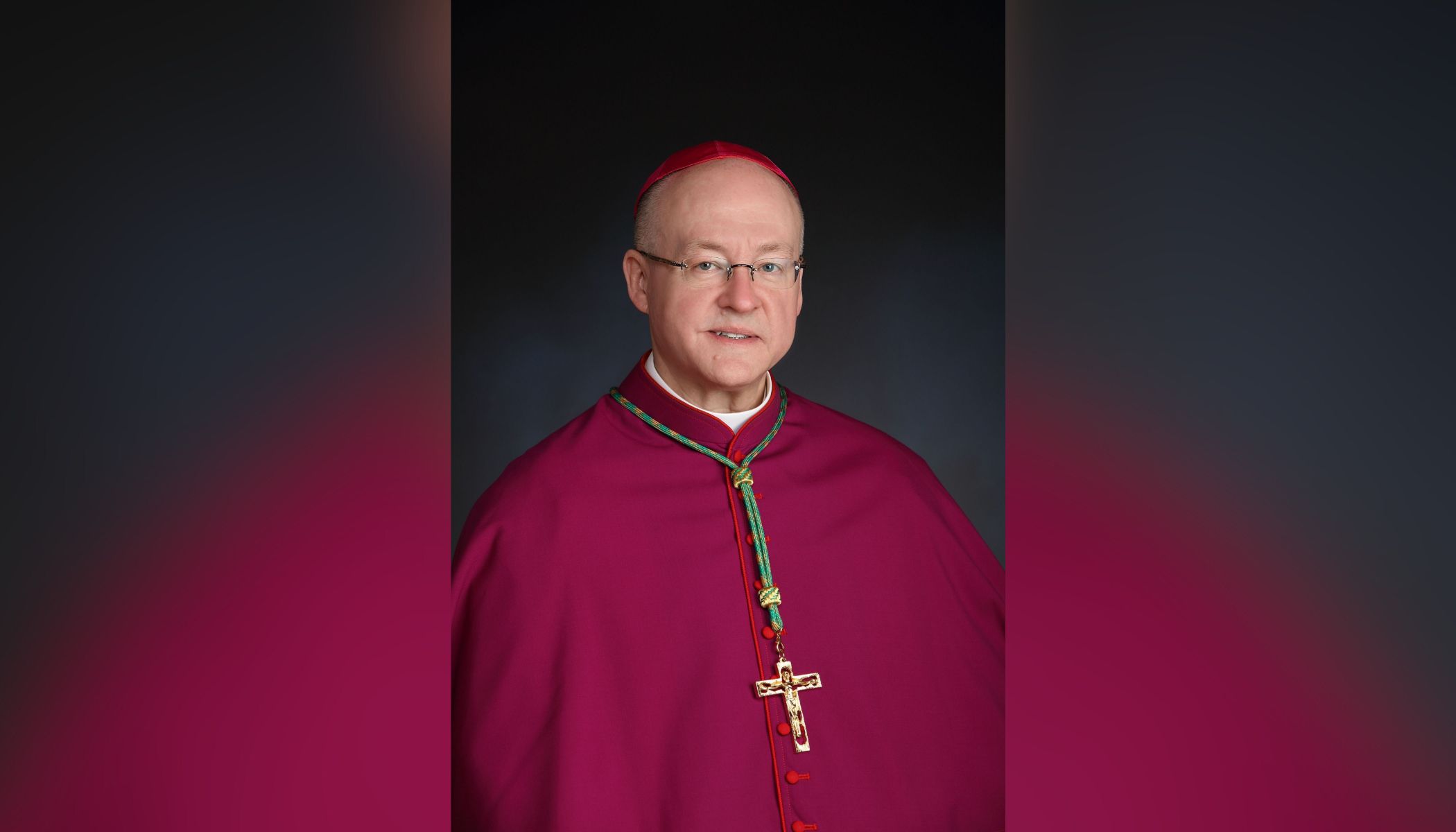
![Catholics urged to strengthen missionary spirit in Prospect Park #Catholic – It was a day to unite the whole Church in one mission, in response to Pope Leo XIV’s call, and for Bishop Kevin J. Sweeney to bring that missionary spirit to a united home church in the Paterson Diocese, N.J.
A nearly full, bilingual crowd of pilgrims, including m missionary priests, religious, and laity, gathered on Oct. 18 at St. Paul Church in Prospect Park, N.J., to join Bishop Kevin J. Sweeney in marking the 100th World Mission Sunday at the parish’s noon Mass.
That afternoon, a video from Pope Leo XIV was shown for World Mission Sunday, which was guided by the theme, One in Christ, United in Mission.
“You saw him smiling in the video, right? He has that beautiful ‘alma misionera,’ that missionary heart and joy that comes, and you can see it in his smile, and in the example that he lives as he asks the whole Church to continue our missionary journey with joy and zeal, enthusiasm,” Bishop Sweeney said after the video. “This requires hearts united, corazones unidos, in Cristo, hearts united in Christ,” he said.
A papal decree from the Second Vatican Council says that our pilgrim Church, by its nature, is a missionary Church.
Click here to subscribe to our weekly newsletter.
“It is from the mission of the Son and the mission of the Holy Spirit that she draws her origin,” the decree expresses.
Pope Leo has been recovering from recent surgery to remove that area of his lungs after he was diagnosed with lung cancer and is waiting for his upcoming trip to Peru, Argentina, and Uruguay. Bishop Sweeney linked the missionary call to the experience of immigrants to the United States, past and present.
During the Mass, St. Paul’s faithful donated to the second collection, the World Mission Sunday collection. Through the Pontifical Mission Societies, proceeds from the collection:
• Support more than 1,100 missionary dioceses across the earth, including Pope Leo XIV’s previous diocese of Chiclayo in Peru,
•Fund religious formation and seminaries worldwide, helping about 80,000 seminarians,
•Support the Missionary Childhood Association, which helps the faith formation and practical needs of children worldwide,
• Fund the Pontifical Missionary Union, which works in formation to help empower missionary disciples.
• Support the Society for the Propagation of the Faith. The Vatican says the society “aims to open the heart of every believer to the vastness of the missionary horizon, through spiritual and material support for the proclamation of the Kingdom of God.”
• Fund the Society of St. Peter the Apostle for priestly and religious vocations.
“As we reflect on being one in Christ and united in mission,” Bishop Sweeney told the congregation in his English and Spanish homily, “let us allow ourselves to be guided and inspired by grace, to renew in ourselves the fire of our missionary vocation, cada uno de nosotros, each one of us, and advance together, juntos como hermanos, that together [as] sisters and brothers, we go forward as missionaries in the commitment of evangelization, sharing the good news of the faith in this new missionary age in the history of the Church.”
Bishop Sweeney continued, “Let us pray at this Mass that we can be renewed in our hearts, at home, in our families, in school, at work, as we live our faith, to renew in ourselves the fire of our missionary vocation.”
BEACON PHOTOS | JOE GIGLI
[See image gallery at beaconnj.org]](https://unitedyam.com/wp-content/uploads/2026/10/catholics-urged-to-strengthen-missionary-spirit-in-prospect-park-catholic-it-was-a-day-to-unite-the-whole-church-in-one-mission-in-response-to-pope-leo-xivs-call-and-for-bishop-kevin-j-sw.jpg "Catholics urged to strengthen missionary spirit in Prospect Park #Catholic – It was a day to unite the whole Church in one mission, in response to Pope Leo XIV’s call, and for Bishop Kevin J. Sweeney to bring that missionary spirit to a united home church in the Paterson Diocese, N.J.
A nearly full, bilingual crowd of pilgrims, including m missionary priests, religious, and laity, gathered on Oct. 18 at St. Paul Church in Prospect Park, N.J., to join Bishop Kevin J. Sweeney in marking the 100th World Mission Sunday at the parish’s noon Mass.
That afternoon, a video from Pope Leo XIV was shown for World Mission Sunday, which was guided by the theme, One in Christ, United in Mission.
“You saw him smiling in the video, right? He has that beautiful ‘alma misionera,’ that missionary heart and joy that comes, and you can see it in his smile, and in the example that he lives as he asks the whole Church to continue our missionary journey with joy and zeal, enthusiasm,” Bishop Sweeney said after the video. “This requires hearts united, corazones unidos, in Cristo, hearts united in Christ,” he said.
A papal decree from the Second Vatican Council says that our pilgrim Church, by its nature, is a missionary Church.
Click here to subscribe to our weekly newsletter.
“It is from the mission of the Son and the mission of the Holy Spirit that she draws her origin,” the decree expresses.
Pope Leo has been recovering from recent surgery to remove that area of his lungs after he was diagnosed with lung cancer and is waiting for his upcoming trip to Peru, Argentina, and Uruguay. Bishop Sweeney linked the missionary call to the experience of immigrants to the United States, past and present.
During the Mass, St. Paul’s faithful donated to the second collection, the World Mission Sunday collection. Through the Pontifical Mission Societies, proceeds from the collection:
• Support more than 1,100 missionary dioceses across the earth, including Pope Leo XIV’s previous diocese of Chiclayo in Peru,
•Fund religious formation and seminaries worldwide, helping about 80,000 seminarians,
•Support the Missionary Childhood Association, which helps the faith formation and practical needs of children worldwide,
• Fund the Pontifical Missionary Union, which works in formation to help empower missionary disciples.
• Support the Society for the Propagation of the Faith. The Vatican says the society “aims to open the heart of every believer to the vastness of the missionary horizon, through spiritual and material support for the proclamation of the Kingdom of God.”
• Fund the Society of St. Peter the Apostle for priestly and religious vocations.
“As we reflect on being one in Christ and united in mission,” Bishop Sweeney told the congregation in his English and Spanish homily, “let us allow ourselves to be guided and inspired by grace, to renew in ourselves the fire of our missionary vocation, cada uno de nosotros, each one of us, and advance together, juntos como hermanos, that together [as] sisters and brothers, we go forward as missionaries in the commitment of evangelization, sharing the good news of the faith in this new missionary age in the history of the Church.”
Bishop Sweeney continued, “Let us pray at this Mass that we can be renewed in our hearts, at home, in our families, in school, at work, as we live our faith, to renew in ourselves the fire of our missionary vocation.”
BEACON PHOTOS | JOE GIGLI
[See image gallery at beaconnj.org]")

Catholics urged to strengthen missionary spirit in Prospect Park #Catholic – 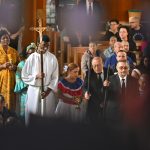
It was a day to unite the whole Church in one mission, in response to Pope Leo XIV’s call, and for Bishop Kevin J. Sweeney to bring that missionary spirit to a united home church in the Paterson Diocese, N.J.
A nearly full, bilingual crowd of pilgrims, including m missionary priests, religious, and laity, gathered on Oct. 18 at St. Paul Church in Prospect Park, N.J., to join Bishop Kevin J. Sweeney in marking the 100th World Mission Sunday at the parish’s noon Mass.
That afternoon, a video from Pope Leo XIV was shown for World Mission Sunday, which was guided by the theme, One in Christ, United in Mission.
“You saw him smiling in the video, right? He has that beautiful ‘alma misionera,’ that missionary heart and joy that comes, and you can see it in his smile, and in the example that he lives as he asks the whole Church to continue our missionary journey with joy and zeal, enthusiasm,” Bishop Sweeney said after the video. “This requires hearts united, corazones unidos, in Cristo, hearts united in Christ,” he said.
A papal decree from the Second Vatican Council says that our pilgrim Church, by its nature, is a missionary Church.
Click here to subscribe to our weekly newsletter.
“It is from the mission of the Son and the mission of the Holy Spirit that she draws her origin,” the decree expresses.
Pope Leo has been recovering from recent surgery to remove that area of his lungs after he was diagnosed with lung cancer and is waiting for his upcoming trip to Peru, Argentina, and Uruguay. Bishop Sweeney linked the missionary call to the experience of immigrants to the United States, past and present.
During the Mass, St. Paul’s faithful donated to the second collection, the World Mission Sunday collection. Through the Pontifical Mission Societies, proceeds from the collection:
• Support more than 1,100 missionary dioceses across the earth, including Pope Leo XIV’s previous diocese of Chiclayo in Peru,
•Fund religious formation and seminaries worldwide, helping about 80,000 seminarians,
•Support the Missionary Childhood Association, which helps the faith formation and practical needs of children worldwide,
• Fund the Pontifical Missionary Union, which works in formation to help empower missionary disciples.
• Support the Society for the Propagation of the Faith. The Vatican says the society “aims to open the heart of every believer to the vastness of the missionary horizon, through spiritual and material support for the proclamation of the Kingdom of God.”
• Fund the Society of St. Peter the Apostle for priestly and religious vocations.
“As we reflect on being one in Christ and united in mission,” Bishop Sweeney told the congregation in his English and Spanish homily, “let us allow ourselves to be guided and inspired by grace, to renew in ourselves the fire of our missionary vocation, cada uno de nosotros, each one of us, and advance together, juntos como hermanos, that together [as] sisters and brothers, we go forward as missionaries in the commitment of evangelization, sharing the good news of the faith in this new missionary age in the history of the Church.”
Bishop Sweeney continued, “Let us pray at this Mass that we can be renewed in our hearts, at home, in our families, in school, at work, as we live our faith, to renew in ourselves the fire of our missionary vocation.”
– It was a day to unite the whole Church in one mission, in response to Pope Leo XIV’s call, and for Bishop Kevin J. Sweeney to bring that missionary spirit to a united home church in the Paterson Diocese, N.J. A nearly full, bilingual crowd of pilgrims, including m missionary priests, religious, and laity, gathered on Oct. 18 at St. Paul Church in Prospect Park, N.J., to join Bishop Kevin J. Sweeney in marking the 100th World Mission Sunday at the parish’s noon Mass. That afternoon, a video from Pope Leo XIV was shown for World Mission Sunday, which was
![Bishop Joensen says Trump meeting ‘exploited’ for politics, while others clarify backstory – #Catholic – A second bishop is expressing regret over a meeting with President Donald Trump at the White House last week and complained that it has been “exploited” for political gain, while others who attended are clarifying the reasons they went.On Oct. 22, the White House posted a video that showed Denver Archbishop James Golka leading a prayer with Trump, surrounded by about a dozen other bishops, who stood beside the president’s spiritual advisor Paula White-Cain and White House Faith Office Director Jennifer Korn.The video was shared by Margo Martin, a White House communications advisor, with no news release to accompany it, nor any description of what was discussed. Golka shared the video on archdiocesan social media and clarified it was not a political endorsement.Bishops who attended the meeting and the prayer have stated they were invited by the White House Faith Office to discuss issues of importance to Catholics: the right to life, the dignity of migrants, religious liberty, and school choice. Several have echoed Golka, emphasizing the meeting and prayer was not a political endorsement, while two have expressed regret for going.On Oct. 25, Milwaukee Archbishop Jeffrey Grob issued a “public apology” for any confusion the video caused, saying he did not know it would be shared publicly and it was not meant to be an endorsement of the president.A second bishop — Des Moines Bishop William Joensen — also emphasized that it was not an endorsement and conveyed regret over the video being used for political purposes.The U.S. Conference of Catholic Bishops (USCCB) had no role in the meeting.‘Exploited’ for politicsOn Oct. 24, two days after the meeting, Joensen issued a statement saying “I would have done well to be more mindful Jesus’ admonition [in the Gospel of Matthew]: ‘Behold, I am sending you like sheep in the midst of wolves; so be shrewd as serpents and simple as doves.’”“I wish I had been more shrewd and less simple, like those who exploited our meeting for partisan political purposes,” Joensen said. “I pray I am more prudent and wise going forward, even as I remain resolute in my openness to engaging and praying for political leaders at all levels.”Joensen did not say who he was accusing of exploiting the meeting and a spokesperson for the diocese did not respond to a request for clarification from EWTN News.In his statement, Joensen said he was invited by officials associated with the Faith Office to talk about a variety of issues: immigration, the exploitation of the poor, visas for international clergy, advancement of a culture of life as an alternative to abortion, and support for private education.“There was also a concluding opportunity to pray for and with our president, that God would guide his heart and impel him to lead in a way consistent with the dignity of his office,” he said.Joensen said “there are many things” linked to the administration “at odds with our Catholic faith.” Yet, he said he attended to “have a conversation” and was informed officials “would be interested in hearing our perspective.”When reached by EWTN News for comment, White House spokeswoman Taylor Rogers said in a statement, “there has never been a greater president for Catholic Americans than President Trump, and his strong record proves it.”“He stopped the weaponization of the federal government against Christians, proudly defended and expanded our religious rights, pardoned pro-life activists, stopped the chemical mutilation of our nation’s children, and protected parents’ rights,” Rogers said, but did not respond to a follow up request for a response to the comments made by Joensen and Grob.Explanations by other bishops In addition to Golka, Grob, and Joensen, a few other bishops have issued statements about the reasons they met and prayed with Trump in the Oval Office and what they talked about with administration officials.The Diocese of Rapid City, South Dakota provided a statement to EWTN News on behalf of Bishop Scott Bullock, which said the delegation discussed Catholic priorities: abortion, school choice, and the ethical implications of in vitro fertilization (IVF).According to the diocesan statement, the bishops’ prayer over Trump is not an “endorsement,” but is rather based in Scripture and following the instruction of St. Paul, who said “supplications, prayers, petitions and thanksgivings be offered for everyone, for kings and for all in authority, that we may lead a quiet and tranquil life in all devotion and dignity.”“We went there and we prayed, and we asked the Lord to instill our leaders with wisdom and also to help them remain humble,” Bullock said.A spokesperson for Diocese of Gallup, New Mexico’s Bishop James Wall told EWTN News that “Bishop Wall does want to express that he would accept a meeting with any politician, if invited, to discuss important church matters, regardless of the time of year and the political party, and that he offers prayers for all who hold political office, that they lead with integrity and not division.” The office of Archbishop Emeritus Joseph Naumann, who led the Archdiocese of Kansas City before retirement, also released a statement indicating that during the meeting the prelate voiced concerns about chemical abortion and IVF, while advocating for pro-life reproductive health care. He also discussed religious liberty, immigration, school choice, and protecting children from pornography.According to the statement, Trump expressed gratitude to the bishops “for prayers asking God to bless and guide the president, his staff and the nation.” The archbishop’s office emphasized this was not an endorsement and that the bishops “were assured that no photographs would be made public.”“They came to have a discussion on important policy matters,” the statement indicated. “As Catholic bishops, they pray with everyone, but do not endorse candidates or political parties.”The following bishops also attended the meeting, according to the White House: Bishop Edward Burns of the Diocese of Dallas, Bishop Steven Raica of the Diocese of Birmingham, Bishop Thomas Hennen of the Diocese of Baker, Bishop Michael Barber of the Diocese of Oakland, Bishop Francis Kalabat of the Chaldean Catholic Church, and Bishop Elias Zaidan of the Maronite Catholic Church.Bishop of Palm Beach Jesús Rodríguez — who did not attend the meeting — opined on the matter on X, saying any action perceived as a political endorsement by a member of the Church hierarchy “must not be construed as representing the official position of the Catholic Church.”The meeting was also attended by Mario Enzler of the Heritage Foundation, though the Heritage Foundation has stated it did not organize it.](https://unitedyam.com/wp-content/uploads/2026/10/bishop-joensen-says-trump-meeting-exploited-for-politics-while-others-clarify-backstory-catholic-a-second-bishop-is-expressing-regret-over-a-meeting-with-president-donald-trump.jpg "Bishop Joensen says Trump meeting ‘exploited’ for politics, while others clarify backstory – #Catholic – A second bishop is expressing regret over a meeting with President Donald Trump at the White House last week and complained that it has been “exploited” for political gain, while others who attended are clarifying the reasons they went.On Oct. 22, the White House posted a video that showed Denver Archbishop James Golka leading a prayer with Trump, surrounded by about a dozen other bishops, who stood beside the president’s spiritual advisor Paula White-Cain and White House Faith Office Director Jennifer Korn.The video was shared by Margo Martin, a White House communications advisor, with no news release to accompany it, nor any description of what was discussed. Golka shared the video on archdiocesan social media and clarified it was not a political endorsement.Bishops who attended the meeting and the prayer have stated they were invited by the White House Faith Office to discuss issues of importance to Catholics: the right to life, the dignity of migrants, religious liberty, and school choice. Several have echoed Golka, emphasizing the meeting and prayer was not a political endorsement, while two have expressed regret for going.On Oct. 25, Milwaukee Archbishop Jeffrey Grob issued a “public apology” for any confusion the video caused, saying he did not know it would be shared publicly and it was not meant to be an endorsement of the president.A second bishop — Des Moines Bishop William Joensen — also emphasized that it was not an endorsement and conveyed regret over the video being used for political purposes.The U.S. Conference of Catholic Bishops (USCCB) had no role in the meeting.‘Exploited’ for politicsOn Oct. 24, two days after the meeting, Joensen issued a statement saying “I would have done well to be more mindful Jesus’ admonition [in the Gospel of Matthew]: ‘Behold, I am sending you like sheep in the midst of wolves; so be shrewd as serpents and simple as doves.’”“I wish I had been more shrewd and less simple, like those who exploited our meeting for partisan political purposes,” Joensen said. “I pray I am more prudent and wise going forward, even as I remain resolute in my openness to engaging and praying for political leaders at all levels.”Joensen did not say who he was accusing of exploiting the meeting and a spokesperson for the diocese did not respond to a request for clarification from EWTN News.In his statement, Joensen said he was invited by officials associated with the Faith Office to talk about a variety of issues: immigration, the exploitation of the poor, visas for international clergy, advancement of a culture of life as an alternative to abortion, and support for private education.“There was also a concluding opportunity to pray for and with our president, that God would guide his heart and impel him to lead in a way consistent with the dignity of his office,” he said.Joensen said “there are many things” linked to the administration “at odds with our Catholic faith.” Yet, he said he attended to “have a conversation” and was informed officials “would be interested in hearing our perspective.”When reached by EWTN News for comment, White House spokeswoman Taylor Rogers said in a statement, “there has never been a greater president for Catholic Americans than President Trump, and his strong record proves it.”“He stopped the weaponization of the federal government against Christians, proudly defended and expanded our religious rights, pardoned pro-life activists, stopped the chemical mutilation of our nation’s children, and protected parents’ rights,” Rogers said, but did not respond to a follow up request for a response to the comments made by Joensen and Grob.Explanations by other bishops In addition to Golka, Grob, and Joensen, a few other bishops have issued statements about the reasons they met and prayed with Trump in the Oval Office and what they talked about with administration officials.The Diocese of Rapid City, South Dakota provided a statement to EWTN News on behalf of Bishop Scott Bullock, which said the delegation discussed Catholic priorities: abortion, school choice, and the ethical implications of in vitro fertilization (IVF).According to the diocesan statement, the bishops’ prayer over Trump is not an “endorsement,” but is rather based in Scripture and following the instruction of St. Paul, who said “supplications, prayers, petitions and thanksgivings be offered for everyone, for kings and for all in authority, that we may lead a quiet and tranquil life in all devotion and dignity.”“We went there and we prayed, and we asked the Lord to instill our leaders with wisdom and also to help them remain humble,” Bullock said.A spokesperson for Diocese of Gallup, New Mexico’s Bishop James Wall told EWTN News that “Bishop Wall does want to express that he would accept a meeting with any politician, if invited, to discuss important church matters, regardless of the time of year and the political party, and that he offers prayers for all who hold political office, that they lead with integrity and not division.” The office of Archbishop Emeritus Joseph Naumann, who led the Archdiocese of Kansas City before retirement, also released a statement indicating that during the meeting the prelate voiced concerns about chemical abortion and IVF, while advocating for pro-life reproductive health care. He also discussed religious liberty, immigration, school choice, and protecting children from pornography.According to the statement, Trump expressed gratitude to the bishops “for prayers asking God to bless and guide the president, his staff and the nation.” The archbishop’s office emphasized this was not an endorsement and that the bishops “were assured that no photographs would be made public.”“They came to have a discussion on important policy matters,” the statement indicated. “As Catholic bishops, they pray with everyone, but do not endorse candidates or political parties.”The following bishops also attended the meeting, according to the White House: Bishop Edward Burns of the Diocese of Dallas, Bishop Steven Raica of the Diocese of Birmingham, Bishop Thomas Hennen of the Diocese of Baker, Bishop Michael Barber of the Diocese of Oakland, Bishop Francis Kalabat of the Chaldean Catholic Church, and Bishop Elias Zaidan of the Maronite Catholic Church.Bishop of Palm Beach Jesús Rodríguez — who did not attend the meeting — opined on the matter on X, saying any action perceived as a political endorsement by a member of the Church hierarchy “must not be construed as representing the official position of the Catholic Church.”The meeting was also attended by Mario Enzler of the Heritage Foundation, though the Heritage Foundation has stated it did not organize it.")
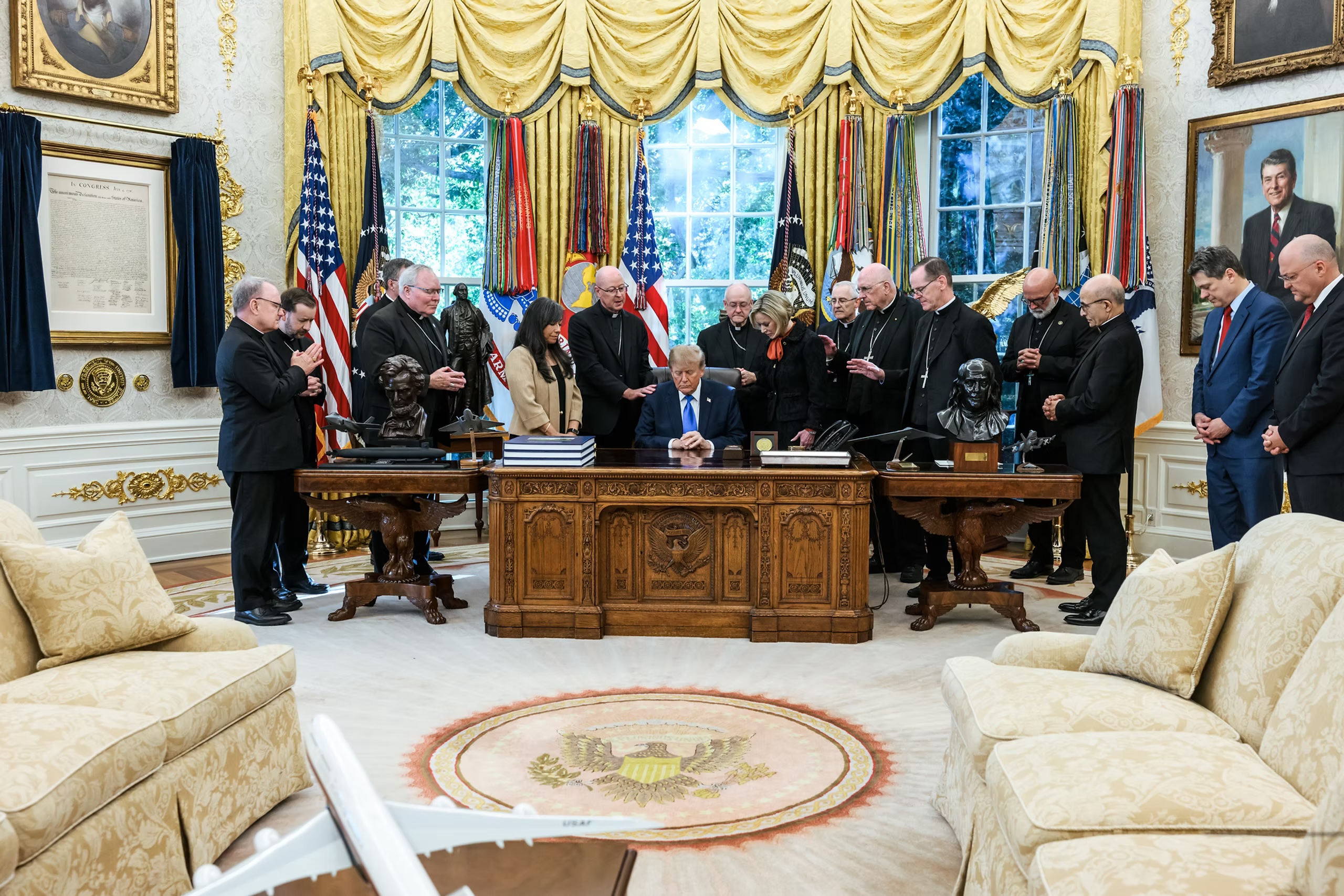







![Milwaukee Archbishop Grob issues ‘public apology’ over White House meeting – #Catholic – Archbishop Jeffrey Grob of Milwaukee on Sunday issued what he called a “public apology” over his part in the Oct. 22 meeting of bishops at the White House.Grob said that over the last few days, he had “received many questions and comments about the October 22 meeting I and 11 other bishops attended at the White House, which was soon thereafter publicized by the administration without the consent of the participants.”He went on to say that his “intention was never to cause confusion, anger, or disappointment among the people entrusted to my care” and that he issued the Oct. 25 statement to provide context for the meeting.The meeting “was in no way an endorsement of the president, his policies, or his party,” Grob said.Last month, Grob explained, he was invited along with other bishops to a meeting to discuss “matters of importance to the Church and our people, including immigration enforcement, religious worker visas, and human dignity.” The meeting was the second of two such gatherings organized by the Heritage Foundation, he said.“We were told the meeting was to be a private discussion, that several Catholic members of the cabinet might make an appearance, and that there could be an opportunity to pray privately with the president,” he continued.After about an hour and a half of meeting on Oct. 22 with White House staff and policy advisers, the archbishop said, the group entered the Oval Office, where they were greeted by President Donald Trump. After being presented with commemorative tokens, Grob said, the group was directed to stand behind the president to pray, and photos were taken afterward.“Unbeknownst to the group of bishops a video was also taken. But permission for the public distribution or posting of either the video or photos was not given by the bishops,” Grob said in his statement. Not long after, photos and the video of the prayer were posted online.“I soon began receiving messages of serious concern over the possibility that I had inadvertently participated in a political event less than two weeks before a national election,” Grob said. “I also heard from some who felt wounded because of the ways they or their family had been harmed by the president’s policies.”“I feel a heavy sadness, not only over the pain I caused, but also for the fact that something so sacred to a group of religious leaders, prayer to our Heavenly Father, would be manipulated in that way,” he continued. “We came in good faith to try to work for the betterment of our fellow human beings, to ease their suffering, to build up the common good, and to pray with a president, not to pose for a political photo opportunity to benefit the few. We should never have been put in that position by the White House.”Grob concluded his statement by saying that he did not go to the meeting “without reservations” and that he wished he “had heeded them.” “I apologize for any damage my actions have done,” he said.EWTN News reached out to the White House for comment regarding Grob’s assertion that the photos and video were shared without the bishops’ consent and received the following response from White House spokeswoman Taylor Rogers: “There has never been a greater president for Catholic Americans than President Trump, and his strong record proves it: he stopped the weaponization of the federal government against Christians, proudly defended and expanded our religious rights, pardoned pro-life activists, stopped the chemical mutilation of our nation’s children, and protected parents’ rights.”Grob’s statement comes after another participant at the Oct. 22 meeting, Denver Archbishop James Golka, who led the prayer in the Oval Office, defended his participation in the event. Golka said he “knew people might be upset” at the event and that it could be "use[d] for political purposes.”“But as I prayed about it, I thought that this is what Catholics do. We pray for people. No matter whether we agree or disagree on anything, we always pray for our country and leaders,” he said in remarks to the Denver Catholic on Oct. 23.Golka, like Grob, also denied that the meeting was in any way an endorsement of the president or his policies. “The bishops of the United States teach that the Church cannot champion any candidate or party,” Golka said. “I hold to that. However you vote, you ultimately belong to Jesus who loves you infinitely more than you can imagine.”This story was updated at 5:22 p.m. ET on Oct. 25, 2026, with the White House statement.](https://unitedyam.com/wp-content/uploads/2026/10/milwaukee-archbishop-grob-issues-public-apology-over-white-house-meeting-catholic-archbishop-jeffrey-grob-of-milwaukee-on-sunday-issued-what-he-called-a-public-apology.jpg "Milwaukee Archbishop Grob issues ‘public apology’ over White House meeting – #Catholic – Archbishop Jeffrey Grob of Milwaukee on Sunday issued what he called a “public apology” over his part in the Oct. 22 meeting of bishops at the White House.Grob said that over the last few days, he had “received many questions and comments about the October 22 meeting I and 11 other bishops attended at the White House, which was soon thereafter publicized by the administration without the consent of the participants.”He went on to say that his “intention was never to cause confusion, anger, or disappointment among the people entrusted to my care” and that he issued the Oct. 25 statement to provide context for the meeting.The meeting “was in no way an endorsement of the president, his policies, or his party,” Grob said.Last month, Grob explained, he was invited along with other bishops to a meeting to discuss “matters of importance to the Church and our people, including immigration enforcement, religious worker visas, and human dignity.” The meeting was the second of two such gatherings organized by the Heritage Foundation, he said.“We were told the meeting was to be a private discussion, that several Catholic members of the cabinet might make an appearance, and that there could be an opportunity to pray privately with the president,” he continued.After about an hour and a half of meeting on Oct. 22 with White House staff and policy advisers, the archbishop said, the group entered the Oval Office, where they were greeted by President Donald Trump. After being presented with commemorative tokens, Grob said, the group was directed to stand behind the president to pray, and photos were taken afterward.“Unbeknownst to the group of bishops a video was also taken. But permission for the public distribution or posting of either the video or photos was not given by the bishops,” Grob said in his statement. Not long after, photos and the video of the prayer were posted online.“I soon began receiving messages of serious concern over the possibility that I had inadvertently participated in a political event less than two weeks before a national election,” Grob said. “I also heard from some who felt wounded because of the ways they or their family had been harmed by the president’s policies.”“I feel a heavy sadness, not only over the pain I caused, but also for the fact that something so sacred to a group of religious leaders, prayer to our Heavenly Father, would be manipulated in that way,” he continued. “We came in good faith to try to work for the betterment of our fellow human beings, to ease their suffering, to build up the common good, and to pray with a president, not to pose for a political photo opportunity to benefit the few. We should never have been put in that position by the White House.”Grob concluded his statement by saying that he did not go to the meeting “without reservations” and that he wished he “had heeded them.” “I apologize for any damage my actions have done,” he said.EWTN News reached out to the White House for comment regarding Grob’s assertion that the photos and video were shared without the bishops’ consent and received the following response from White House spokeswoman Taylor Rogers: “There has never been a greater president for Catholic Americans than President Trump, and his strong record proves it: he stopped the weaponization of the federal government against Christians, proudly defended and expanded our religious rights, pardoned pro-life activists, stopped the chemical mutilation of our nation’s children, and protected parents’ rights.”Grob’s statement comes after another participant at the Oct. 22 meeting, Denver Archbishop James Golka, who led the prayer in the Oval Office, defended his participation in the event. Golka said he “knew people might be upset” at the event and that it could be \"use[d] for political purposes.”“But as I prayed about it, I thought that this is what Catholics do. We pray for people. No matter whether we agree or disagree on anything, we always pray for our country and leaders,” he said in remarks to the Denver Catholic on Oct. 23.Golka, like Grob, also denied that the meeting was in any way an endorsement of the president or his policies. “The bishops of the United States teach that the Church cannot champion any candidate or party,” Golka said. “I hold to that. However you vote, you ultimately belong to Jesus who loves you infinitely more than you can imagine.”This story was updated at 5:22 p.m. ET on Oct. 25, 2026, with the White House statement.")


![St. Mary’s man found faith through pre-game football Masses #Catholic – Billy Harris, longtime parishioner at St. Mary’s Parish in Denville, N.J., “is a person who lives his faith, and you can see it in his actions, in his words, and in his deeds. He lives it very faithfully every single day,” according to Father Martin Glynn, St. Mary’s pastor.
That faith was in motion back in 1980, when Harris and his Whippany Park High School Wildcat teammates faced reigning state champion Madison High School in the 1980 Group II Section II state football final.
Early in the second quarter, the Wildcats led 3-0 and had the ball at their own 40-yard line when quarterback Mark Grasso heaved a 50-yard pass, which Harris took away from the opposing defender at the 10-yard line and scooted for the touchdown and an eventual 10-0 lead.
It was the biggest catch of the season for the 1980 Wildcats football team, a team that rarely passed the ball. The Wildcats would go on to win, 10 – 9, for Whippany Park High School’s lone state football crown, and they finished the season with 10 wins and one loss.
Click here to subscribe to our weekly newsletter.
Harris said, “We [he and his former teammates] have gotten together and brought back the old game films, and I just remember smiling the entire time. It is almost indescribable how the bond has stayed with us.”
Harris and his teammates also had deep faith and relied on God. Before every game, except one [coincidentally, that game against Chatham was their only loss], the team would travel in the morning to the chapel at Notre Dame of Mount Carmel Parish in the Cedar Knolls neighborhood in Hanover Township, N.J. There, they attended a Mass celebrated by the late Father Regis Wallace. The club would also recite a pre-game prayer in the locker room before heading out to the gridiron.
In 1980, Harris was a parishioner of Notre Dame of Mount Carmel. Later, he was part of their Operation Appalachia Ministry group, where he spent a week each year in Preston County, W.V. doing volunteer construction work. Harris eventually moved to Denville, where he became a member of St. Mary’s Parish and joined its Outreach Ministry. The ministry combined with that of Notre Dame’s to travel to West Virginia with more than 50 volunteers. Harris has been part of that first-week-of-August volunteer effort for 20 years.
Harris, who is also a member of the Knights of Columbus, and his brother, Joseph, an ordained permanent deacon at Notre Dame, would bring their children with them on Operation Appalachia Ministry mission trips. Joseph’s daughter, Julia, met and later married Dan Rizos, a member of Saint Mary’s volunteer group, and now runs Operation Appalachia for Notre Dame.
In 1980, Father Wallace’s pregame homily spoke about teamwork and friendship, which moved Harris and his teammates.
“That team was comprised of friends, and we grew together for a common goal. And playing together built relationships that are still very dear to us today,” Harris said.
With his wife, Dawn, Harris has a daughter, Kelsey, and his son, Mark, who are also involved at St. Mary’s. In addition to Operation Appalachia, Harris helps with the annual parish picnic and live streaming of the Sunday Masses.
“Billy is very much involved with our outreach programs,” Father Glynn said. “He has a very open heart, especially for those who are vulnerable. And he really comes to the plate when you need him. He’s also involved in the celebration for the 100th anniversary of the founding of St. Mary’s,” the pastor said.](https://unitedyam.com/wp-content/uploads/2026/10/st-marys-man-found-faith-through-pre-game-football-masses-catholic-billy-harris-longtime-parishioner-at-st-marys-parish-in-denville-n-j-is-a-person-who-lives-his-fa.jpg "St. Mary’s man found faith through pre-game football Masses #Catholic – Billy Harris, longtime parishioner at St. Mary’s Parish in Denville, N.J., “is a person who lives his faith, and you can see it in his actions, in his words, and in his deeds. He lives it very faithfully every single day,” according to Father Martin Glynn, St. Mary’s pastor.
That faith was in motion back in 1980, when Harris and his Whippany Park High School Wildcat teammates faced reigning state champion Madison High School in the 1980 Group II Section II state football final.
Early in the second quarter, the Wildcats led 3-0 and had the ball at their own 40-yard line when quarterback Mark Grasso heaved a 50-yard pass, which Harris took away from the opposing defender at the 10-yard line and scooted for the touchdown and an eventual 10-0 lead.
It was the biggest catch of the season for the 1980 Wildcats football team, a team that rarely passed the ball. The Wildcats would go on to win, 10 – 9, for Whippany Park High School’s lone state football crown, and they finished the season with 10 wins and one loss.
Click here to subscribe to our weekly newsletter.
Harris said, “We [he and his former teammates] have gotten together and brought back the old game films, and I just remember smiling the entire time. It is almost indescribable how the bond has stayed with us.”
Harris and his teammates also had deep faith and relied on God. Before every game, except one [coincidentally, that game against Chatham was their only loss], the team would travel in the morning to the chapel at Notre Dame of Mount Carmel Parish in the Cedar Knolls neighborhood in Hanover Township, N.J. There, they attended a Mass celebrated by the late Father Regis Wallace. The club would also recite a pre-game prayer in the locker room before heading out to the gridiron.
In 1980, Harris was a parishioner of Notre Dame of Mount Carmel. Later, he was part of their Operation Appalachia Ministry group, where he spent a week each year in Preston County, W.V. doing volunteer construction work. Harris eventually moved to Denville, where he became a member of St. Mary’s Parish and joined its Outreach Ministry. The ministry combined with that of Notre Dame’s to travel to West Virginia with more than 50 volunteers. Harris has been part of that first-week-of-August volunteer effort for 20 years.
Harris, who is also a member of the Knights of Columbus, and his brother, Joseph, an ordained permanent deacon at Notre Dame, would bring their children with them on Operation Appalachia Ministry mission trips. Joseph’s daughter, Julia, met and later married Dan Rizos, a member of Saint Mary’s volunteer group, and now runs Operation Appalachia for Notre Dame.
In 1980, Father Wallace’s pregame homily spoke about teamwork and friendship, which moved Harris and his teammates.
“That team was comprised of friends, and we grew together for a common goal. And playing together built relationships that are still very dear to us today,” Harris said.
With his wife, Dawn, Harris has a daughter, Kelsey, and his son, Mark, who are also involved at St. Mary’s. In addition to Operation Appalachia, Harris helps with the annual parish picnic and live streaming of the Sunday Masses.
“Billy is very much involved with our outreach programs,” Father Glynn said. “He has a very open heart, especially for those who are vulnerable. And he really comes to the plate when you need him. He’s also involved in the celebration for the 100th anniversary of the founding of St. Mary’s,” the pastor said.")


:max_bytes(150000):strip_icc():format(jpeg)/TAL-header-garnet-montana-MTGHOSTTOWN1025-b8ef349f7829477fad7cb7243abb5216.jpg)
:max_bytes(150000):strip_icc():format(jpeg)/TAL-lead-image-PISMOBEACHCA0426-2f37c150c90f47419c7773568e843c54.jpg)
![Denver archbishop responds to criticism over Trump prayer meeting: ‘I was being a Catholic priest’ – #Catholic – Denver Archbishop James Golka this week defended his participation in a prayer event with U.S. President Donald Trump at the Oval Office, citing the gathering as an opportunity to publicly pray and evangelize the faith. Golka, who was installed in the Denver Archdiocese in March after serving as the bishop of Colorado Springs for several years, led a prayer during an Oct. 22 meeting at the Oval Office between Trump and several U.S. bishops. During the gathering the archbishop in part prayed for the Holy Spirit to “surround our country, to protect us against any influence of evil.”The prayer event generated some backlash for what critics have argued was a politically motivated photo opportunity on the part of the White House. Golka this week said he “knew people might be upset” at the event and that it could be "use[d] for political purposes.” “But as I prayed about it, I thought that this is what Catholics do. We pray for people. No matter whether we agree or disagree on anything, we always pray for our country and leaders,” he said in remarks to the Denver Catholic. Golka said during the meeting he articulated Church teachings to the president. “As Catholics, we’re called to share our faith in season and out of season and to witness to the dignity of every human person,” he told the Denver Catholic. He denied that the event, including video of the prayer shared on social media, constituted an “endorsement” of the president. “That was never my intention,” he said. “The bishops of the United States teach that the Church cannot champion any candidate or party,” he said. “I hold to that. However you vote, you ultimately belong to Jesus who loves you infinitely more than you can imagine.”The archbishop said he has received criticism from friends about the decision and that he has responded by telling them: “I was being a Catholic priest.” He described himself as “heartbroken” at the anger over the event. He urged Christians to “look beyond the headlines, which are often crafted to provoke, towards the full truth.” “I will keep praying for our president, our governor and everyone who serves in public office, regardless of their party or position on divisive topics,” he said. The Archdiocese of Denver said after the event that praying for public leaders “is a long Catholic practice” that dates back to Apostolic Age.](https://unitedyam.com/wp-content/uploads/2026/10/denver-archbishop-responds-to-criticism-over-trump-prayer-meeting-i-was-being-a-catholic-priest-catholic-denver-archbishop-james-golka-this-week-defended-his-participation-in-a.jpg "Denver archbishop responds to criticism over Trump prayer meeting: ‘I was being a Catholic priest’ – #Catholic – Denver Archbishop James Golka this week defended his participation in a prayer event with U.S. President Donald Trump at the Oval Office, citing the gathering as an opportunity to publicly pray and evangelize the faith. Golka, who was installed in the Denver Archdiocese in March after serving as the bishop of Colorado Springs for several years, led a prayer during an Oct. 22 meeting at the Oval Office between Trump and several U.S. bishops. During the gathering the archbishop in part prayed for the Holy Spirit to “surround our country, to protect us against any influence of evil.”The prayer event generated some backlash for what critics have argued was a politically motivated photo opportunity on the part of the White House. Golka this week said he “knew people might be upset” at the event and that it could be \"use[d] for political purposes.” “But as I prayed about it, I thought that this is what Catholics do. We pray for people. No matter whether we agree or disagree on anything, we always pray for our country and leaders,” he said in remarks to the Denver Catholic. Golka said during the meeting he articulated Church teachings to the president. “As Catholics, we’re called to share our faith in season and out of season and to witness to the dignity of every human person,” he told the Denver Catholic. He denied that the event, including video of the prayer shared on social media, constituted an “endorsement” of the president. “That was never my intention,” he said. “The bishops of the United States teach that the Church cannot champion any candidate or party,” he said. “I hold to that. However you vote, you ultimately belong to Jesus who loves you infinitely more than you can imagine.”The archbishop said he has received criticism from friends about the decision and that he has responded by telling them: “I was being a Catholic priest.” He described himself as “heartbroken” at the anger over the event. He urged Christians to “look beyond the headlines, which are often crafted to provoke, towards the full truth.” “I will keep praying for our president, our governor and everyone who serves in public office, regardless of their party or position on divisive topics,” he said. The Archdiocese of Denver said after the event that praying for public leaders “is a long Catholic practice” that dates back to Apostolic Age.")
![Students for Life, Turning Point debate abortion in ‘Feminists Lied’ campus tour – #Catholic – Students for Life of America and Turning Point USA teamed up this month to launch a new tour on college campuses, in which students are invited to debate the ethics of abortion with a pro-life speaker.The tour, titled “Feminists Lied: Prove Me Wrong,” features Students for Life President Kristan Hawkins. It began on Oct. 20 to challenge the view that feminism and a legal right to abortion have helped women rather than hurt them.“For decades, young women were told that career success, a degree, and independence were the keys to happiness, and that abortion was the price of equality,” Hawkins, who is Catholic, said in a statement.“Many Millennial women now ask whether those promises delivered, and Gen Z deserves to hear that conversation before they make the same choices,” she said. “Motherhood is not a weakness to be overcome. If equality requires a woman to end her pregnancy to succeed, then we haven’t liberated her at all. We’ve just handed her a different burden and called it freedom.”The tour includes visits to eight campuses: the University of North Texas, Grand Valley State University, the University of Cincinnati, Boise State University, the University of New Mexico, the University of Arizona, Southern Oregon University, and the University of Washington.Following the first event at the University of North Texas, Hawkins posted on X that her pro-life tour is intended to be in line with “Charlie’s legacy,” referencing Turning Point founder Charlie Kirk, who was assassinated on Sept. 10, 2025 during a college speaking and debating tour.Kirk, who was a conservative activist, frequently challenged abortion and encouraged young people to start families. He was an evangelical Christian who often blended political activism with evangelism.CatholicVote reaches Hispanics on Virginia abortion initiativeThe conservative organization CatholicVote has teamed up with Eduardo Verástegui — a Mexican actor and star in Sound of Freedom — to reach Hispanic voters in Virginia and encourage them to vote against a referendum that would enshrine a right to abortion in the state constitution.The advertisement, in Spanish, informs voters of the “very important” referendum, and notes that the state’s bishops have spoken with clarity against the proposal. The bishops of both dioceses in the state have said Catholics have a “sacred duty” to vote no.Verástegui also highlighted the bishops’ opposition to a separate ballot initiative to enshrine same-sex marriage in the state constitution.English archbishop voices concern over euthanasia law in Isle of ManArchbishop John Sherrington expressed sadness that an "assisted dying” bill will become law on the Isle of Man, which is a self-governing Crown Dependency of the British Crown.“The Catholic Church continues to teach that life is a most precious gift of God and that we are stewards entrusted with this gift to protect it, treat illness, and care for the good of life,” said Sherrington, whose jurisdiction includes the Isle of Man.“As such, a person should never intentionally end his or her life,” he said. “Catholic teaching, shared by many Christians and others of goodwill, proposes a different approach from that which has been passed into law by the Tynwald.”The law will allow people who are terminally ill to receive physician-assisted suicide.Arizona man wins lawsuit against abortion clinicAn Arizona man named Mario Villegas won a lawsuit against the Phoenix-based abortion clinic Camelback Family Planning after a court found that the clinic failed to follow the state’s informed consent law when his then-wife was prescribed chemical abortion drugs.Villegas was awarded $5,000 in statutory damages and $62,500 in compensatory damages for his psychological, emotional, and physical injuries. He had argued in court that the clinic did not adequately inform his wife, from whom he is now divorced, about the development of the unborn child, risks associated with abortion, and possible alternatives.In awarding Villegas damages, the court outlined that he was unable to properly function, eat, or sleep after his wife decided she wanted an abortion. The court highlighted his statements about feeling guilty after the abortion, saying "my baby was no longer living, and [I was wondering], ‘was there anything else I could have [done] to change the outcome?’”The court noted that he had spoken about his grief, with him expressing his “feeling of loss” and saying, “I lost an opportunity to have somebody in my life.”Villegas carries the ultrasound photo of his unborn child everywhere he goes, according to the court.](https://unitedyam.com/wp-content/uploads/2026/10/students-for-life-turning-point-debate-abortion-in-feminists-lied-campus-tour-catholic-students-for-life-of-america-and-turning-point-usa-teamed-up-this-month-to-launch-a-new-t-scaled.jpg "Students for Life, Turning Point debate abortion in ‘Feminists Lied’ campus tour – #Catholic – Students for Life of America and Turning Point USA teamed up this month to launch a new tour on college campuses, in which students are invited to debate the ethics of abortion with a pro-life speaker.The tour, titled “Feminists Lied: Prove Me Wrong,” features Students for Life President Kristan Hawkins. It began on Oct. 20 to challenge the view that feminism and a legal right to abortion have helped women rather than hurt them.“For decades, young women were told that career success, a degree, and independence were the keys to happiness, and that abortion was the price of equality,” Hawkins, who is Catholic, said in a statement.“Many Millennial women now ask whether those promises delivered, and Gen Z deserves to hear that conversation before they make the same choices,” she said. “Motherhood is not a weakness to be overcome. If equality requires a woman to end her pregnancy to succeed, then we haven’t liberated her at all. We’ve just handed her a different burden and called it freedom.”The tour includes visits to eight campuses: the University of North Texas, Grand Valley State University, the University of Cincinnati, Boise State University, the University of New Mexico, the University of Arizona, Southern Oregon University, and the University of Washington.Following the first event at the University of North Texas, Hawkins posted on X that her pro-life tour is intended to be in line with “Charlie’s legacy,” referencing Turning Point founder Charlie Kirk, who was assassinated on Sept. 10, 2025 during a college speaking and debating tour.Kirk, who was a conservative activist, frequently challenged abortion and encouraged young people to start families. He was an evangelical Christian who often blended political activism with evangelism.CatholicVote reaches Hispanics on Virginia abortion initiativeThe conservative organization CatholicVote has teamed up with Eduardo Verástegui — a Mexican actor and star in Sound of Freedom — to reach Hispanic voters in Virginia and encourage them to vote against a referendum that would enshrine a right to abortion in the state constitution.The advertisement, in Spanish, informs voters of the “very important” referendum, and notes that the state’s bishops have spoken with clarity against the proposal. The bishops of both dioceses in the state have said Catholics have a “sacred duty” to vote no.Verástegui also highlighted the bishops’ opposition to a separate ballot initiative to enshrine same-sex marriage in the state constitution.English archbishop voices concern over euthanasia law in Isle of ManArchbishop John Sherrington expressed sadness that an \"assisted dying” bill will become law on the Isle of Man, which is a self-governing Crown Dependency of the British Crown.“The Catholic Church continues to teach that life is a most precious gift of God and that we are stewards entrusted with this gift to protect it, treat illness, and care for the good of life,” said Sherrington, whose jurisdiction includes the Isle of Man.“As such, a person should never intentionally end his or her life,” he said. “Catholic teaching, shared by many Christians and others of goodwill, proposes a different approach from that which has been passed into law by the Tynwald.”The law will allow people who are terminally ill to receive physician-assisted suicide.Arizona man wins lawsuit against abortion clinicAn Arizona man named Mario Villegas won a lawsuit against the Phoenix-based abortion clinic Camelback Family Planning after a court found that the clinic failed to follow the state’s informed consent law when his then-wife was prescribed chemical abortion drugs.Villegas was awarded $5,000 in statutory damages and $62,500 in compensatory damages for his psychological, emotional, and physical injuries. He had argued in court that the clinic did not adequately inform his wife, from whom he is now divorced, about the development of the unborn child, risks associated with abortion, and possible alternatives.In awarding Villegas damages, the court outlined that he was unable to properly function, eat, or sleep after his wife decided she wanted an abortion. The court highlighted his statements about feeling guilty after the abortion, saying \"my baby was no longer living, and [I was wondering], ‘was there anything else I could have [done] to change the outcome?’”The court noted that he had spoken about his grief, with him expressing his “feeling of loss” and saying, “I lost an opportunity to have somebody in my life.”Villegas carries the ultrasound photo of his unborn child everywhere he goes, according to the court.")
![Paterson Parish showcases powerful devotion during St. Therese Mass #Catholic – On Oct. 4, Bishop Kevin J. Sweeney helped St. Therese Parish in Paterson, N.J., celebrate the feast day of St. Thérèse the Little Flower, traditionally observed on Oct. 1, with a Spanish Mass in the church. The popular saint is also known as St. Thérèse of Lisieux and St. Thérèse of the Child Jesus.
Father Yasid Salas, St. Therese’s pastor, concelebrated the Mass with Bishop Sweeney. The Mass included many faithful dressed as St. Thérèse and a dramatic devotion to her.
BEACON PHOTOS | JOE GIGLI
[See image gallery at beaconnj.org]
Click here to subscribe to our weekly newsletter.](https://unitedyam.com/wp-content/uploads/2026/10/paterson-parish-showcases-powerful-devotion-during-st-therese-mass-catholic-on-oct-4-bishop-kevin-j-sweeney-helped-st-therese-parish-in-paterson-n-j-celebrate-the-feast-day-of-st-therese-t.jpg "Paterson Parish showcases powerful devotion during St. Therese Mass #Catholic – On Oct. 4, Bishop Kevin J. Sweeney helped St. Therese Parish in Paterson, N.J., celebrate the feast day of St. Thérèse the Little Flower, traditionally observed on Oct. 1, with a Spanish Mass in the church. The popular saint is also known as St. Thérèse of Lisieux and St. Thérèse of the Child Jesus.
Father Yasid Salas, St. Therese’s pastor, concelebrated the Mass with Bishop Sweeney. The Mass included many faithful dressed as St. Thérèse and a dramatic devotion to her.
BEACON PHOTOS | JOE GIGLI
[See image gallery at beaconnj.org]
Click here to subscribe to our weekly newsletter.")
![‘He died doing what he loved’: Memories of the Ecuadorian priest who died at the altar #Catholic “He died doing what he loved, the Eucharist” is how Father Pedro Calle remembered his fellow Redemptorist, Father Patricio Sánchez Molinari, who died Oct. 17 after a large crucifix broke loose from the sanctuary wall and fell on him during Mass.“It’s not so easy to process or come to terms with this situation, given the way it happened,” Calle shared in an interview with EWTN News Español, the Spanish-language sister service of EWTN News. “I could break down at any moment because of the pain I feel inside.”Calle lives in Quito, Ecuador, and manages the administrative needs of the Redemptorist congregation in the Andean-Caribbean Province, which comprises Venezuela, Colombia, and Ecuador. He is currently in Guayaquil serving also as the legal representative to handle matters related to Sánchez’s death. He is also taking part in the Oct. 19–27 novena for the repose of his soul.
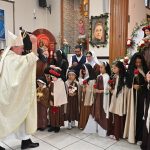
Father Patricio Sánchez Molinari with some of the faithful at Our Lady of Perpetual Help Church. | Credit: Photo courtesy of Father Pedro Calle
“He died embracing the cross. The crucifix was not damaged, save for the part of the leg [of the corpus]. It is striking how he celebrated the Lord’s passover, and the Lord celebrated his passover with him… And Patricio died doing what he loved: the Eucharist,” the priest emphasized.He loved the Eucharist and the Blessed Virgin MaryCalle described Sánchez as a man “with a pure heart and a ready smile, a smile that created a sense of closeness. People were drawn to him because of his purity of heart, in which there was no trace of ill intent. He was always so very calm, patient, and tolerant.”“He very much loved the Blessed Sacrament. Wherever he went to any parish he would always emphasize this devotion. And he was always the first one there; he wouldn’t just expose the Blessed Sacrament for a while and then leave, he would stay to pray,” the priest recounted.Sánchez served in Loja, in southern Ecuador, and later in a mission area called Vinces. He also spent nine years at a parish in Manta, and finally about four years in Guayaquil, at Our Lady of Perpetual Help Church. He served as the pastor there, and it was in that church that he died.
Father Patricio Sánchez Molinari with some of the faithful. | Credit: Photo courtesy of Father Pedro Calle
“He also loved the Most Holy Virgin Mary. We can describe Patricio as someone who throughout his ministry everyone felt his closeness to them, absolutely everyone,” the Redemptorist priest highlighted.“He was always a very dedicated man, always spiritual and pastoral. He would say ‘yes’ to everyone. We could say, then, that he was a hardworking man, very self-sacrificing, very devoted,” he remarked.Calle further noted that “Patricio was a very simple person, very approachable and full of human warmth. That’s why his homilies were so simple.”“My enduring memory of Patricio,” he added, “is that he was a very welcoming person, always concerned with making sure one had something to eat or drink. He enjoyed going to the cinema and was an athletic person; he liked going for a walk and swimming.”‘A sign of grace’The priest shared that he never had a conversation with Sánchez about how he would have liked to be remembered, but he highlighted one aspect he has been reflecting on in recent days following the tragic death of his fellow priest.“Patricio’s death will become, or is already becoming, a sign of grace for Catholics and for humanity, given the fact that he was in the midst of broadcasting [the Mass] and that the tragedy unfolded in precisely this way, rather than any other. That was a message for everyone,” Calle remarked.
Father Patricio Sánchez Molinari with a group of the faithful. | Credit: Photo courtesy of Father Pedro Calle
The priest remarked, in closing, that he does not know where the story of this priest will ultimately lead but that it certainly will not leave anyone indifferent.“I don’t know if his mission is beginning now. I cannot offer any certainty or assurance; it is simply a personal perception, based on the context and the way he died.”‘One day, all of us here will also die’Sánchez was born on Nov. 6, 1973, in Cuenca, Ecuador. He made his profession in the Congregation of the Most Holy Redeemer (Redemptorists) on Aug. 15, 2000, the solemnity of the Assumption of the Blessed Virgin Mary. He was ordained a priest on Oct. 15, 2005.He was pastor at Our Lady of Perpetual Help Parish in south Guayaquil. He served as the superior of his religious community, where he lived alongside a fellow religious brother who had taken his perpetual vows.In his final homily, on the day of his death, he spoke about the importance of making time for God. “He must come first,” he said, adding: “Dear brothers and sisters, one day, all of us here will also die. Sometimes, the time we have spent on material things does not hold as much meaning as the time we dedicate to God, that quality time we give to God, to our brothers and sisters, to our wife, our husband, to our children, and to our families. That is time spent in the best possible way.”This story was first published by EWTN News Español, the Spanish-language sister service of EWTN News. It has been translated and adapted by EWTN News English.](https://unitedyam.com/wp-content/uploads/2026/10/he-died-doing-what-he-loved-memories-of-the-ecuadorian-priest-who-died-at-the-altar-catholic-he-died-doing-what-he-loved-the-eucharist-is-how-father-pedro-calle.jpg "‘He died doing what he loved’: Memories of the Ecuadorian priest who died at the altar #Catholic “He died doing what he loved, the Eucharist” is how Father Pedro Calle remembered his fellow Redemptorist, Father Patricio Sánchez Molinari, who died Oct. 17 after a large crucifix broke loose from the sanctuary wall and fell on him during Mass.“It’s not so easy to process or come to terms with this situation, given the way it happened,” Calle shared in an interview with EWTN News Español, the Spanish-language sister service of EWTN News. “I could break down at any moment because of the pain I feel inside.”Calle lives in Quito, Ecuador, and manages the administrative needs of the Redemptorist congregation in the Andean-Caribbean Province, which comprises Venezuela, Colombia, and Ecuador. He is currently in Guayaquil serving also as the legal representative to handle matters related to Sánchez’s death. He is also taking part in the Oct. 19–27 novena for the repose of his soul.
Father Patricio Sánchez Molinari with some of the faithful at Our Lady of Perpetual Help Church. | Credit: Photo courtesy of Father Pedro Calle
“He died embracing the cross. The crucifix was not damaged, save for the part of the leg [of the corpus]. It is striking how he celebrated the Lord’s passover, and the Lord celebrated his passover with him… And Patricio died doing what he loved: the Eucharist,” the priest emphasized.He loved the Eucharist and the Blessed Virgin MaryCalle described Sánchez as a man “with a pure heart and a ready smile, a smile that created a sense of closeness. People were drawn to him because of his purity of heart, in which there was no trace of ill intent. He was always so very calm, patient, and tolerant.”“He very much loved the Blessed Sacrament. Wherever he went to any parish he would always emphasize this devotion. And he was always the first one there; he wouldn’t just expose the Blessed Sacrament for a while and then leave, he would stay to pray,” the priest recounted.Sánchez served in Loja, in southern Ecuador, and later in a mission area called Vinces. He also spent nine years at a parish in Manta, and finally about four years in Guayaquil, at Our Lady of Perpetual Help Church. He served as the pastor there, and it was in that church that he died.
Father Patricio Sánchez Molinari with some of the faithful. | Credit: Photo courtesy of Father Pedro Calle
“He also loved the Most Holy Virgin Mary. We can describe Patricio as someone who throughout his ministry everyone felt his closeness to them, absolutely everyone,” the Redemptorist priest highlighted.“He was always a very dedicated man, always spiritual and pastoral. He would say ‘yes’ to everyone. We could say, then, that he was a hardworking man, very self-sacrificing, very devoted,” he remarked.Calle further noted that “Patricio was a very simple person, very approachable and full of human warmth. That’s why his homilies were so simple.”“My enduring memory of Patricio,” he added, “is that he was a very welcoming person, always concerned with making sure one had something to eat or drink. He enjoyed going to the cinema and was an athletic person; he liked going for a walk and swimming.”‘A sign of grace’The priest shared that he never had a conversation with Sánchez about how he would have liked to be remembered, but he highlighted one aspect he has been reflecting on in recent days following the tragic death of his fellow priest.“Patricio’s death will become, or is already becoming, a sign of grace for Catholics and for humanity, given the fact that he was in the midst of broadcasting [the Mass] and that the tragedy unfolded in precisely this way, rather than any other. That was a message for everyone,” Calle remarked.
Father Patricio Sánchez Molinari with a group of the faithful. | Credit: Photo courtesy of Father Pedro Calle
The priest remarked, in closing, that he does not know where the story of this priest will ultimately lead but that it certainly will not leave anyone indifferent.“I don’t know if his mission is beginning now. I cannot offer any certainty or assurance; it is simply a personal perception, based on the context and the way he died.”‘One day, all of us here will also die’Sánchez was born on Nov. 6, 1973, in Cuenca, Ecuador. He made his profession in the Congregation of the Most Holy Redeemer (Redemptorists) on Aug. 15, 2000, the solemnity of the Assumption of the Blessed Virgin Mary. He was ordained a priest on Oct. 15, 2005.He was pastor at Our Lady of Perpetual Help Parish in south Guayaquil. He served as the superior of his religious community, where he lived alongside a fellow religious brother who had taken his perpetual vows.In his final homily, on the day of his death, he spoke about the importance of making time for God. “He must come first,” he said, adding: “Dear brothers and sisters, one day, all of us here will also die. Sometimes, the time we have spent on material things does not hold as much meaning as the time we dedicate to God, that quality time we give to God, to our brothers and sisters, to our wife, our husband, to our children, and to our families. That is time spent in the best possible way.”This story was first published by EWTN News Español, the Spanish-language sister service of EWTN News. It has been translated and adapted by EWTN News English.")

,_parque_nacional_Ras_Muhammad,_Egipto,_2022-03-28,_DD_119.jpg)

:max_bytes(150000):strip_icc():format(jpeg)/TAL-yellowstone-FIRSTTIMENP1225-9af87cd3b864422f8e7fcdd34c86c637.jpg)



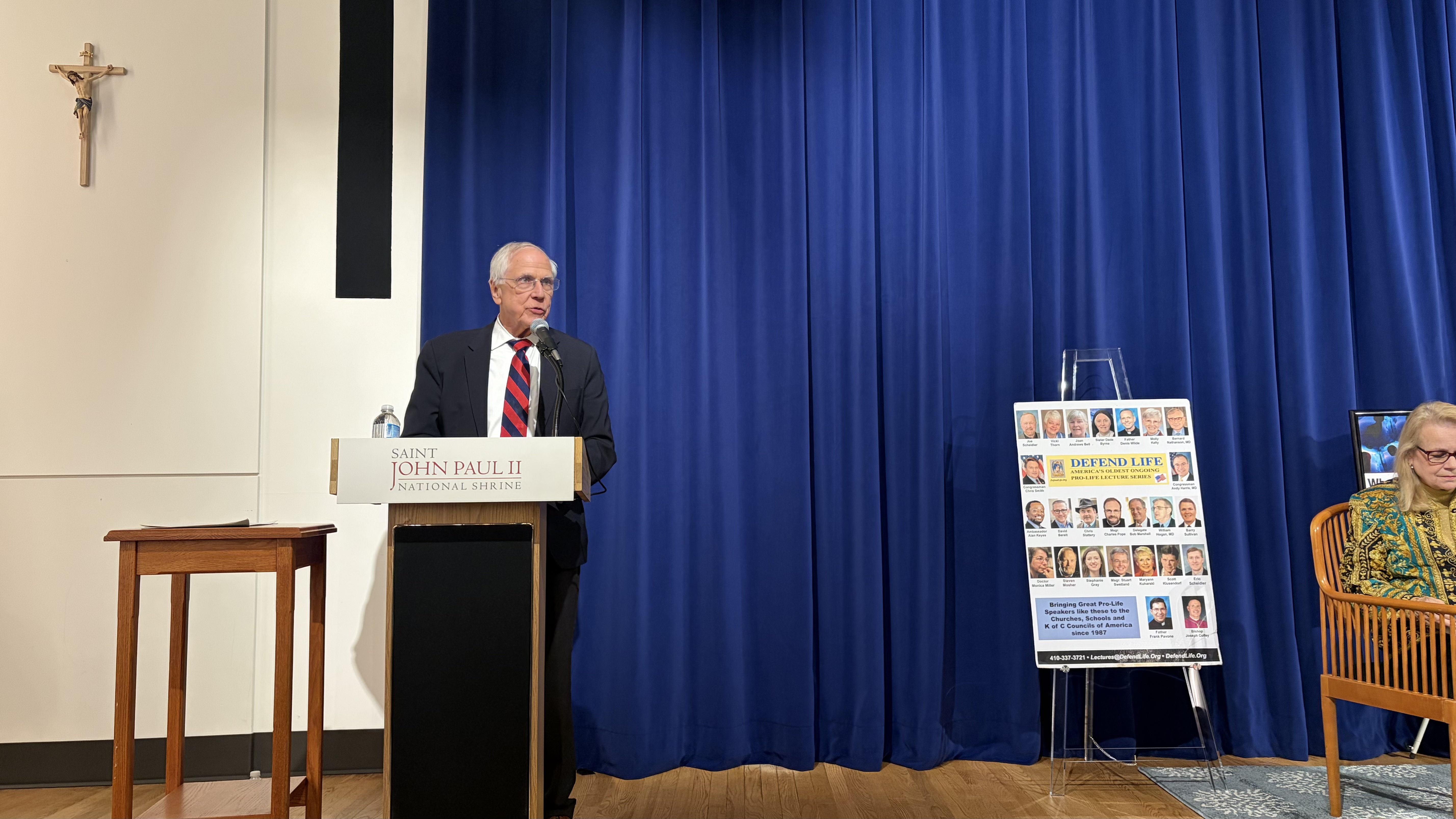
![Catholic ethicists debate morality of embryo adoption – #Catholic – Can embryo adoption be considered morally licit by the Catholic Church? The John Paul II Shrine in Washington, D.C., hosted a debate between two Catholic ethicists Oct. 22 in an event marking the feast of St. John Paul II.The Catholic Church has not issued a definitive judgment that embryo adoption is morally licit. The issue remains debated among Catholic theologians. In the 2008 Vatican document Dignitas Personae, the Church affirmed the dignity and rights of frozen embryos and expressed reservations about proposals for prenatal adoption.John Haas, president emeritus of the National Catholic Bioethics Center, argued that embryo adoption is morally illicit as it requires the artificial transfer of a frozen embryo into the womb of a woman who is unrelated to the unborn child — a practice he said both violates the Church’s teachings about sexual ethics in marriage and deliberately endangers the lives of embryos in the thawing process.Haas further argued that the only moral solution to the question of what to do with frozen embryos is to keep them frozen, as bringing them to life or disposing of them in any way would always be considered illicit. To support this claim, he cited the 1987 Vatican document Donum Vitae, which states: “In consequence of the fact that they have been produced in vitro, those embryos which art not transferred into the body of the mother and are called ‘spare’ are exposed to an absurd fate, with no possibility of their being offered safe means of survival which can be licitly pursued.”Organized by the pro-life organization Defend Life, the event took place after a Mass in honor of St. John Paul II and was livestreamed on the organization’s website.Elizabeth Rex, an associate scholar at the Charlotte Lozier Institute, argued in favor of embryo adoption, saying that neither the Vatican nor the U.S. Conference of Catholic Bishops (USCCB) have “ever formally ruled against embryo transfer or embryo adoption.”
Elizabeth Rex, an associate scholar at the Charlotte Lozier Institute, argues in favor of embryo adoption during a debate at the John Paul II Shrine in Washington, D.C., Oct. 22, 2026. | Credit: Madalaine Elhabbal/EWTN News
While acknowledging the Church’s teaching that in vitro fertilization (IVF) is immoral, Rex argued that the process of IVF and the transfer of the embryo into a mother’s womb should not be separated.“They go together. You donʼt do IVF just to leave [the embryo] in the petri dish or put it in the freezer. That would be an abortion,” she said. “The baby would die. So, the baby now has been conceived, and it needs to be transferred into the womb. Itʼs a person. Itʼs a child. Itʼs a patient, and it needs medical assistance. And that is what the Church teaches there.”Haas countered Rex’s argument that the Church has not ruled out embryo adoption, saying: “The only statement from the magisterium of the Church that has fueled this debate is one half of one sentence from Dignitas Personae that the supporters of embryo adoption often donʼt bother to finish when they quote it.”The paragraph he cited in the document states: “It has also been proposed, solely in order to allow human beings to be born who are otherwise condemned to destruction, that there could be a form of ‘prenatal adoption.’ This proposal, praiseworthy with regard to the intention of respecting and defending human life, presents however various problems not dissimilar to those mentioned above. All things considered, it needs to be recognized that the thousands of abandoned embryos represent a situation of injustice which in fact cannot be resolved.”Haas argued that the ends do not justify the means with regard to embryo adoption and that the Holy See has not made “a single statement on behalf of embryo adoption.”](https://unitedyam.com/wp-content/uploads/2026/10/catholic-ethicists-debate-morality-of-embryo-adoption-catholic-can-embryo-adoption-be-considered-morally-licit-by-the-catholic-church-the-john-paul-ii-shrine-in-washington-d-c-hosted-a-debate-scaled.jpg "Catholic ethicists debate morality of embryo adoption – #Catholic – Can embryo adoption be considered morally licit by the Catholic Church? The John Paul II Shrine in Washington, D.C., hosted a debate between two Catholic ethicists Oct. 22 in an event marking the feast of St. John Paul II.The Catholic Church has not issued a definitive judgment that embryo adoption is morally licit. The issue remains debated among Catholic theologians. In the 2008 Vatican document Dignitas Personae, the Church affirmed the dignity and rights of frozen embryos and expressed reservations about proposals for prenatal adoption.John Haas, president emeritus of the National Catholic Bioethics Center, argued that embryo adoption is morally illicit as it requires the artificial transfer of a frozen embryo into the womb of a woman who is unrelated to the unborn child — a practice he said both violates the Church’s teachings about sexual ethics in marriage and deliberately endangers the lives of embryos in the thawing process.Haas further argued that the only moral solution to the question of what to do with frozen embryos is to keep them frozen, as bringing them to life or disposing of them in any way would always be considered illicit. To support this claim, he cited the 1987 Vatican document Donum Vitae, which states: “In consequence of the fact that they have been produced in vitro, those embryos which art not transferred into the body of the mother and are called ‘spare’ are exposed to an absurd fate, with no possibility of their being offered safe means of survival which can be licitly pursued.”Organized by the pro-life organization Defend Life, the event took place after a Mass in honor of St. John Paul II and was livestreamed on the organization’s website.Elizabeth Rex, an associate scholar at the Charlotte Lozier Institute, argued in favor of embryo adoption, saying that neither the Vatican nor the U.S. Conference of Catholic Bishops (USCCB) have “ever formally ruled against embryo transfer or embryo adoption.”
Elizabeth Rex, an associate scholar at the Charlotte Lozier Institute, argues in favor of embryo adoption during a debate at the John Paul II Shrine in Washington, D.C., Oct. 22, 2026. | Credit: Madalaine Elhabbal/EWTN News
While acknowledging the Church’s teaching that in vitro fertilization (IVF) is immoral, Rex argued that the process of IVF and the transfer of the embryo into a mother’s womb should not be separated.“They go together. You donʼt do IVF just to leave [the embryo] in the petri dish or put it in the freezer. That would be an abortion,” she said. “The baby would die. So, the baby now has been conceived, and it needs to be transferred into the womb. Itʼs a person. Itʼs a child. Itʼs a patient, and it needs medical assistance. And that is what the Church teaches there.”Haas countered Rex’s argument that the Church has not ruled out embryo adoption, saying: “The only statement from the magisterium of the Church that has fueled this debate is one half of one sentence from Dignitas Personae that the supporters of embryo adoption often donʼt bother to finish when they quote it.”The paragraph he cited in the document states: “It has also been proposed, solely in order to allow human beings to be born who are otherwise condemned to destruction, that there could be a form of ‘prenatal adoption.’ This proposal, praiseworthy with regard to the intention of respecting and defending human life, presents however various problems not dissimilar to those mentioned above. All things considered, it needs to be recognized that the thousands of abandoned embryos represent a situation of injustice which in fact cannot be resolved.”Haas argued that the ends do not justify the means with regard to embryo adoption and that the Holy See has not made “a single statement on behalf of embryo adoption.”")

![St. Therese Mountain Lakes event honors U.S.’ 250th birthday #Catholic – The Rosary and Prayer Ministry of St. Thérèse the Little Flower of St. Catherine of Siena Church in Mountain Lakes, N.J. on Oct. 11 honored the feast day of St. Therese during a devotional event with Bishop Kevin J. Sweeney in the parish church. The popular saint is also known as St. Thérèse of Lisieux and St. Thérèse of the Child Jesus.
The event featured prayer, music, the Knights of Columbus, bagpipers, five vocalists, organist, a harpist and a patriotic finale to celebrate the 250th birthday of the United States this year.
Despite the inclement weather, more than 200 people clergy, religious and laity attended the event, which began with a processional by Bishop Sweeney; Father Michael J. Parisi, pastor of the parish and vicar general of the Paterson Diocese, N.J.; Deacon James Gillespie opened the ceremony at St. Catherine’s; and the Knights of Columbus Color Corps processed with the Bishop.
Click here to subscribe to our weekly newsletter.
Music featured at the event included Highland Cathedral, Panis Angelicus, the St. Thérèse Hymn, Walk With Us, Dear St. Thérèse, Let there Be Peace on Earth, Be Still My Soul, I Believe, You’ll Never Walk Alone, Lady of Knock, and Ava Maria.
The bagpipers were Bill McEvoy and Paul O’Sullivan. David de la Mora, St. Catherine’s choir director, on piano and vocalist; Lou Scarpa, a trustee at Assumption College for Sisters in Denville, an organist; Kathleen Donahue, harpist and music director at St. Mary’s in Denville; her husband Michael Donahue, vocalist; Barbara Bailey and Deborah Tobia, vocalists and parishioners of St. Catherine of Siena Church. In honor of Deborah’s devotion to our blessed saint, she wrote and composed the St. Therese Hymn which she sang.
During the patriotic finale, cub scouts from Pack 99, Boy Scouts, soldiers from Picatinny Arsenal held the American flag which was 10 feet wide. Jonathan Morales, was the vocalist who performed the Patriotic Finale with songs, such as America The Beautiful, God Bless America, Glory, Glory Hallelujah and the entire congregation recited The Pledge of Allegiance.
Bishop Sweeney concluded by a closing blessing with the Relic of St. Therese. Closing remarks by Carol Bsarany who leads the St. Thérèse Ministry. A reception followed in the parish gym.
The St. Thérèse prayer group meets at St. Catherine’s on Tuesdays at 1 p.m. from May through December. Members pray the Novena to St. Thérèse, a prayer for our nation, the Memorare, and the rosary. Participants are asked to bring a rosary. The group will provide prayer materials.
Two events left for this year are Tuesday, Nov. 17 healing service with Father Edward Rama, pastor of St. Bernard of Clairvaux Parish in Wharton, N.J., at 1 p.m.; the Christmas concert featuring two vocalists and an organist on Tuesday, Dec. 15 at 1 p.m. This will be our last prayer service for this year. We will reopen on Tuesday, May 4th, 2027.
St. Thérèse was a Discalced Carmelite nun in France who died at 24 on Sept. 30, 1897.
While the St. Thérèse Ministry meets at St. Catherine’s, the Shrine of St. Thérèse at 54 Rock Lane in Boonton about a mile away is open year-round. Hours for the Shrine are 8 a.m. To 6 p.m. The faithful can continue to visit and light a candle.
The shrine represents the gratitude of its founder, Achille Arci. He made a promise to her in the 1920s after he was cured of an illness. Today, Our Lady of Mount Carmel Parish in Boonton, N.J., owns and cares for the shrine.
For further information please call Carol Bsarany at 973-271-9252.
BEACON PHOTOS | JOE GIGLI
[See image gallery at beaconnj.org]](https://unitedyam.com/wp-content/uploads/2026/10/st-therese-mountain-lakes-event-honors-u-s-250th-birthday-catholic-the-rosary-and-prayer-ministry-of-st-therese-the-little-flower-of-st-catherine-of-siena-church-in-mountain-lakes-n-j.jpg "St. Therese Mountain Lakes event honors U.S.’ 250th birthday #Catholic – The Rosary and Prayer Ministry of St. Thérèse the Little Flower of St. Catherine of Siena Church in Mountain Lakes, N.J. on Oct. 11 honored the feast day of St. Therese during a devotional event with Bishop Kevin J. Sweeney in the parish church. The popular saint is also known as St. Thérèse of Lisieux and St. Thérèse of the Child Jesus.
The event featured prayer, music, the Knights of Columbus, bagpipers, five vocalists, organist, a harpist and a patriotic finale to celebrate the 250th birthday of the United States this year.
Despite the inclement weather, more than 200 people clergy, religious and laity attended the event, which began with a processional by Bishop Sweeney; Father Michael J. Parisi, pastor of the parish and vicar general of the Paterson Diocese, N.J.; Deacon James Gillespie opened the ceremony at St. Catherine’s; and the Knights of Columbus Color Corps processed with the Bishop.
Click here to subscribe to our weekly newsletter.
Music featured at the event included Highland Cathedral, Panis Angelicus, the St. Thérèse Hymn, Walk With Us, Dear St. Thérèse, Let there Be Peace on Earth, Be Still My Soul, I Believe, You’ll Never Walk Alone, Lady of Knock, and Ava Maria.
The bagpipers were Bill McEvoy and Paul O’Sullivan. David de la Mora, St. Catherine’s choir director, on piano and vocalist; Lou Scarpa, a trustee at Assumption College for Sisters in Denville, an organist; Kathleen Donahue, harpist and music director at St. Mary’s in Denville; her husband Michael Donahue, vocalist; Barbara Bailey and Deborah Tobia, vocalists and parishioners of St. Catherine of Siena Church. In honor of Deborah’s devotion to our blessed saint, she wrote and composed the St. Therese Hymn which she sang.
During the patriotic finale, cub scouts from Pack 99, Boy Scouts, soldiers from Picatinny Arsenal held the American flag which was 10 feet wide. Jonathan Morales, was the vocalist who performed the Patriotic Finale with songs, such as America The Beautiful, God Bless America, Glory, Glory Hallelujah and the entire congregation recited The Pledge of Allegiance.
Bishop Sweeney concluded by a closing blessing with the Relic of St. Therese. Closing remarks by Carol Bsarany who leads the St. Thérèse Ministry. A reception followed in the parish gym.
The St. Thérèse prayer group meets at St. Catherine’s on Tuesdays at 1 p.m. from May through December. Members pray the Novena to St. Thérèse, a prayer for our nation, the Memorare, and the rosary. Participants are asked to bring a rosary. The group will provide prayer materials.
Two events left for this year are Tuesday, Nov. 17 healing service with Father Edward Rama, pastor of St. Bernard of Clairvaux Parish in Wharton, N.J., at 1 p.m.; the Christmas concert featuring two vocalists and an organist on Tuesday, Dec. 15 at 1 p.m. This will be our last prayer service for this year. We will reopen on Tuesday, May 4th, 2027.
St. Thérèse was a Discalced Carmelite nun in France who died at 24 on Sept. 30, 1897.
While the St. Thérèse Ministry meets at St. Catherine’s, the Shrine of St. Thérèse at 54 Rock Lane in Boonton about a mile away is open year-round. Hours for the Shrine are 8 a.m. To 6 p.m. The faithful can continue to visit and light a candle.
The shrine represents the gratitude of its founder, Achille Arci. He made a promise to her in the 1920s after he was cured of an illness. Today, Our Lady of Mount Carmel Parish in Boonton, N.J., owns and cares for the shrine.
For further information please call Carol Bsarany at 973-271-9252.
BEACON PHOTOS | JOE GIGLI
[See image gallery at beaconnj.org]")
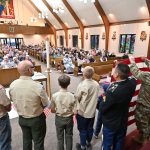
,_hunting.jpg)
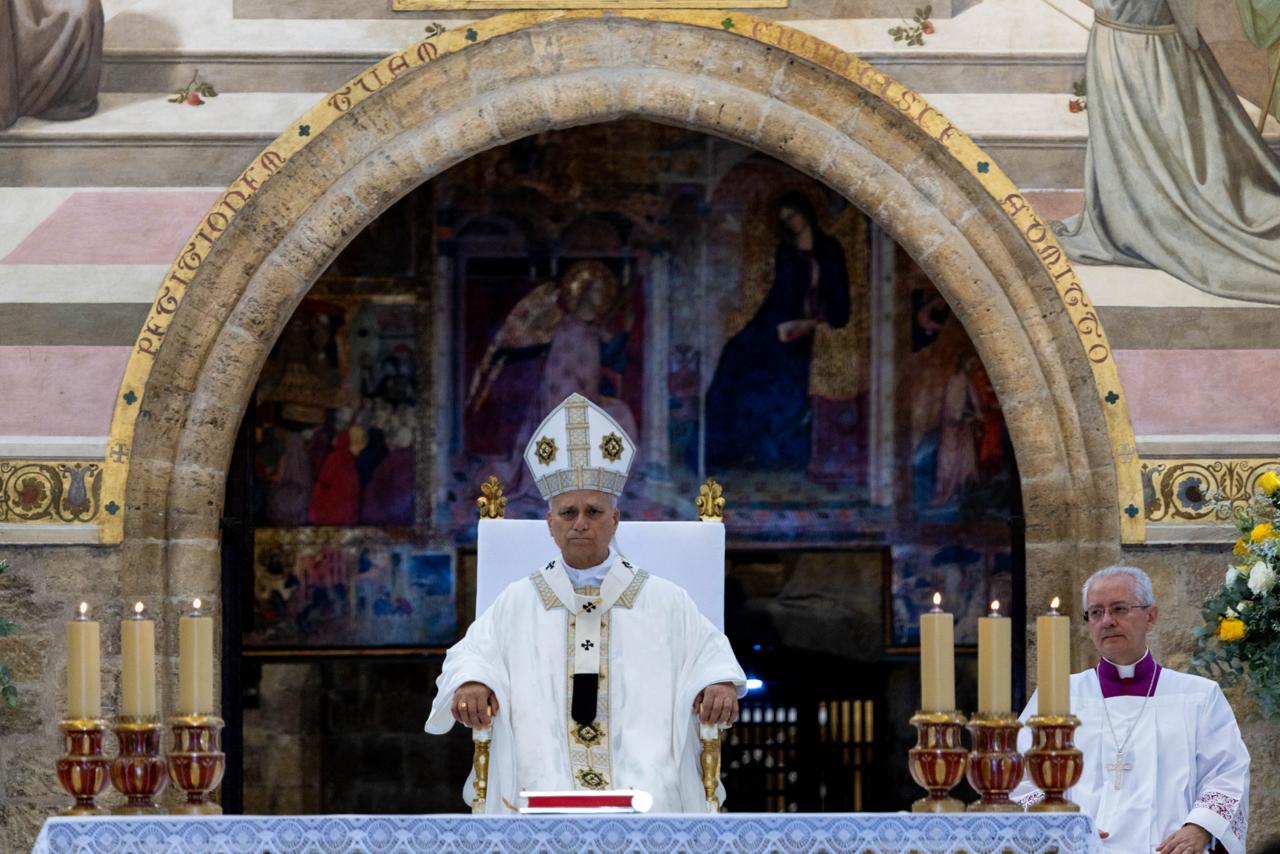
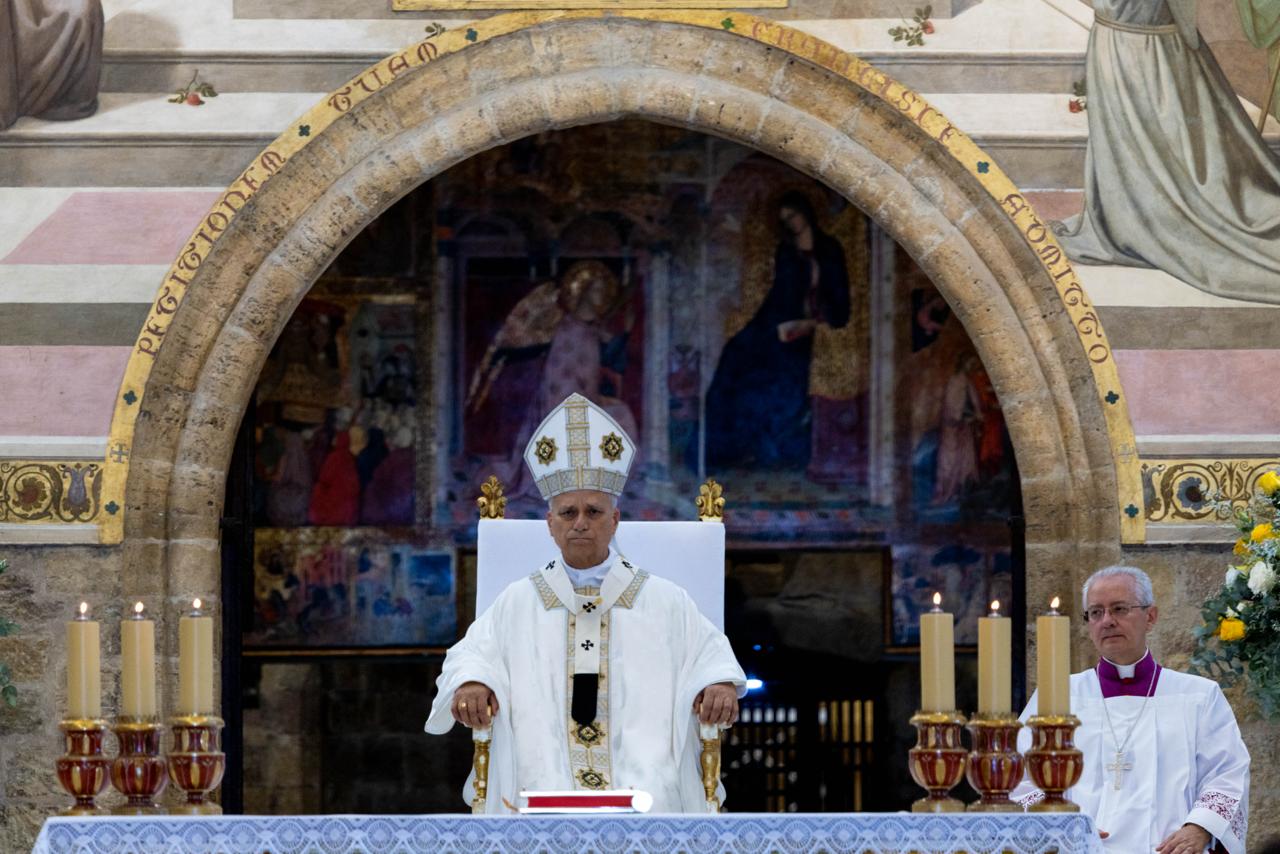


![Vice President Vance to EWTN: ‘We are God’s ambassadors on Earth’ #Catholic Vice President JD Vance on Oct. 22 told Raymond Arroyo on EWTN News’ “The World Over with Raymond Arroyo” that God calls Christians to be “humble in the face [of] uncertainty” and that Christians walking in faith often “take two steps toward Jesus and one step back” before arriving at Christ. Vance spoke with Arroyo in a wide-ranging interview that included politics, immigration, economics, and faith. The vice president has been especially forthcoming about his own faith journey, one which began in Appalachian Protestant churches and eventually led him to the Catholic Church. He attended Christian churches while growing up but was drawn to what in June he described as the “beautiful ancient Church” of Catholicism. Speaking with Arroyo, Vance described a religious experience in which he was driving on mountain roads back from his grandmother’s funeral and nearly drove off the road. “And just like right at that point where Iʼm like, all right, Iʼm about to go over the side of the mountain, the car just comes to a completely restful stop,” he said. “Like God put his hand on that car and made it stop.”The experience “gnawed at me,” Vance said, describing the event as “a door opening.” “[W]e are ultimately Godʼs ambassadors here on Earth,” he said, describing what he said is the “powerful” witness of Christians “doing good things.” Arroyo and Vance discussed several other topics in the interview, including the ongoing civil unrest and rioting in France. “I donʼt think you can talk about whatʼs happening in France without acknowledging the role of migration,” Vance said. “Because in the neighborhoods where you see the most significant violence, the most significant outburst, the burning of these beautiful historical buildings — you often have neighborhoods with extremely high immigrant populations.”Western societies “want to be welcoming to people,” the vice president said. But “when we allow someone into our country, are they culturally compatible? Are they willing to assimilate into Western values and Western society?”Asked about Church leadership on immigration issues, Vance — who has publicly disagreed with the U.S. bishops on some aspects of the immigration debate — said he would “never accuse the Church of being naive.” The Church “will say two things that I fundamentally believe in and agree with, but I think 90% of people agree with, which is: One, you must be welcoming towards a stranger. On the other hand, nations are allowed to control their borders.” As Vance sees it, the Church leadership in the U.S. has “missed an opportunity” to strike a balance on immigration in an age of high migration. He noted that the airplane is “less than 100 years old” and that rapid large-scale immigration is “a very new phenomenon.” “I do think the Church has to figure out what should the immigration policy of an advanced economy be in a world of mass transit,” he said. He noted that Christians are called “to be fundamentally hopeful [of] the future.” He disputed arguments that France is on the verge of “civilizational death,” describing it instead as “civilizational risk.” “[I] think that if France returns to its Christian roots, it can be welcoming to the stranger. It can also protect its borders and in a way that preserves its civilization,” he said.](https://unitedyam.com/wp-content/uploads/2026/10/vice-president-vance-to-ewtn-we-are-gods-ambassadors-on-earth-catholic-vice-president-jd-vance-on-oct-22-told-raymond-arroyo-on-ewtn-news-the-world-over.png "Vice President Vance to EWTN: ‘We are God’s ambassadors on Earth’ #Catholic Vice President JD Vance on Oct. 22 told Raymond Arroyo on EWTN News’ “The World Over with Raymond Arroyo” that God calls Christians to be “humble in the face [of] uncertainty” and that Christians walking in faith often “take two steps toward Jesus and one step back” before arriving at Christ. Vance spoke with Arroyo in a wide-ranging interview that included politics, immigration, economics, and faith. The vice president has been especially forthcoming about his own faith journey, one which began in Appalachian Protestant churches and eventually led him to the Catholic Church. He attended Christian churches while growing up but was drawn to what in June he described as the “beautiful ancient Church” of Catholicism. Speaking with Arroyo, Vance described a religious experience in which he was driving on mountain roads back from his grandmother’s funeral and nearly drove off the road. “And just like right at that point where Iʼm like, all right, Iʼm about to go over the side of the mountain, the car just comes to a completely restful stop,” he said. “Like God put his hand on that car and made it stop.”The experience “gnawed at me,” Vance said, describing the event as “a door opening.” “[W]e are ultimately Godʼs ambassadors here on Earth,” he said, describing what he said is the “powerful” witness of Christians “doing good things.” Arroyo and Vance discussed several other topics in the interview, including the ongoing civil unrest and rioting in France. “I donʼt think you can talk about whatʼs happening in France without acknowledging the role of migration,” Vance said. “Because in the neighborhoods where you see the most significant violence, the most significant outburst, the burning of these beautiful historical buildings — you often have neighborhoods with extremely high immigrant populations.”Western societies “want to be welcoming to people,” the vice president said. But “when we allow someone into our country, are they culturally compatible? Are they willing to assimilate into Western values and Western society?”Asked about Church leadership on immigration issues, Vance — who has publicly disagreed with the U.S. bishops on some aspects of the immigration debate — said he would “never accuse the Church of being naive.” The Church “will say two things that I fundamentally believe in and agree with, but I think 90% of people agree with, which is: One, you must be welcoming towards a stranger. On the other hand, nations are allowed to control their borders.” As Vance sees it, the Church leadership in the U.S. has “missed an opportunity” to strike a balance on immigration in an age of high migration. He noted that the airplane is “less than 100 years old” and that rapid large-scale immigration is “a very new phenomenon.” “I do think the Church has to figure out what should the immigration policy of an advanced economy be in a world of mass transit,” he said. He noted that Christians are called “to be fundamentally hopeful [of] the future.” He disputed arguments that France is on the verge of “civilizational death,” describing it instead as “civilizational risk.” “[I] think that if France returns to its Christian roots, it can be welcoming to the stranger. It can also protect its borders and in a way that preserves its civilization,” he said.")
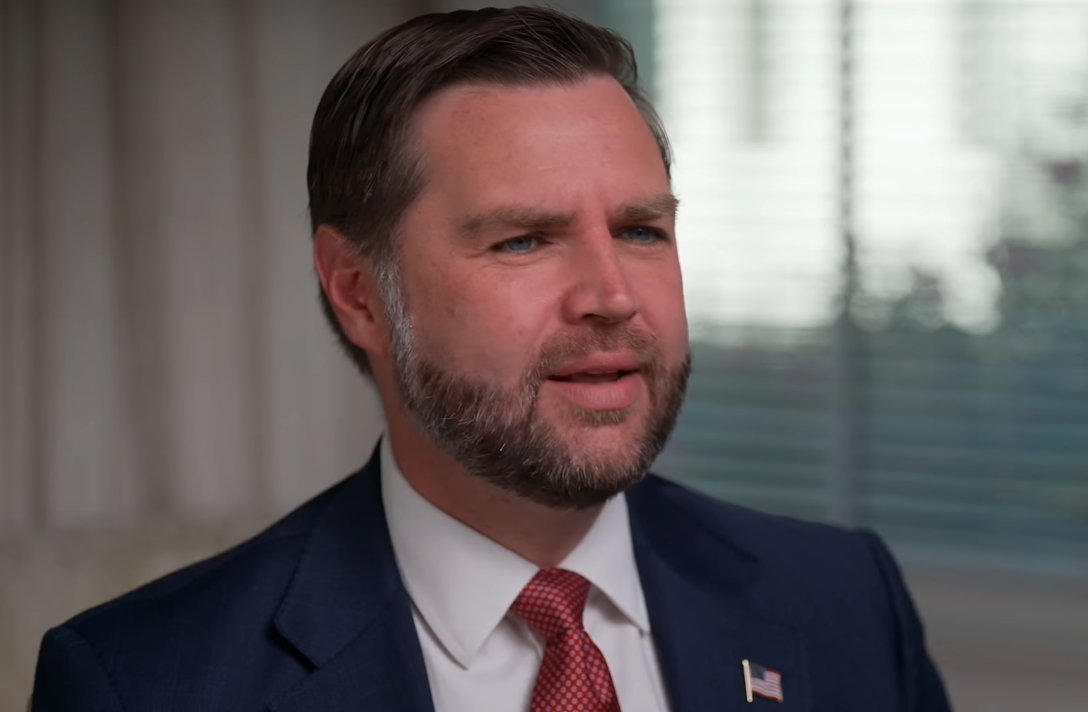
:max_bytes(150000):strip_icc():format(jpeg)/TAL-lead-image-JAPANBUDGET0226-e361efa18d95404a918991048caa9596.jpg)
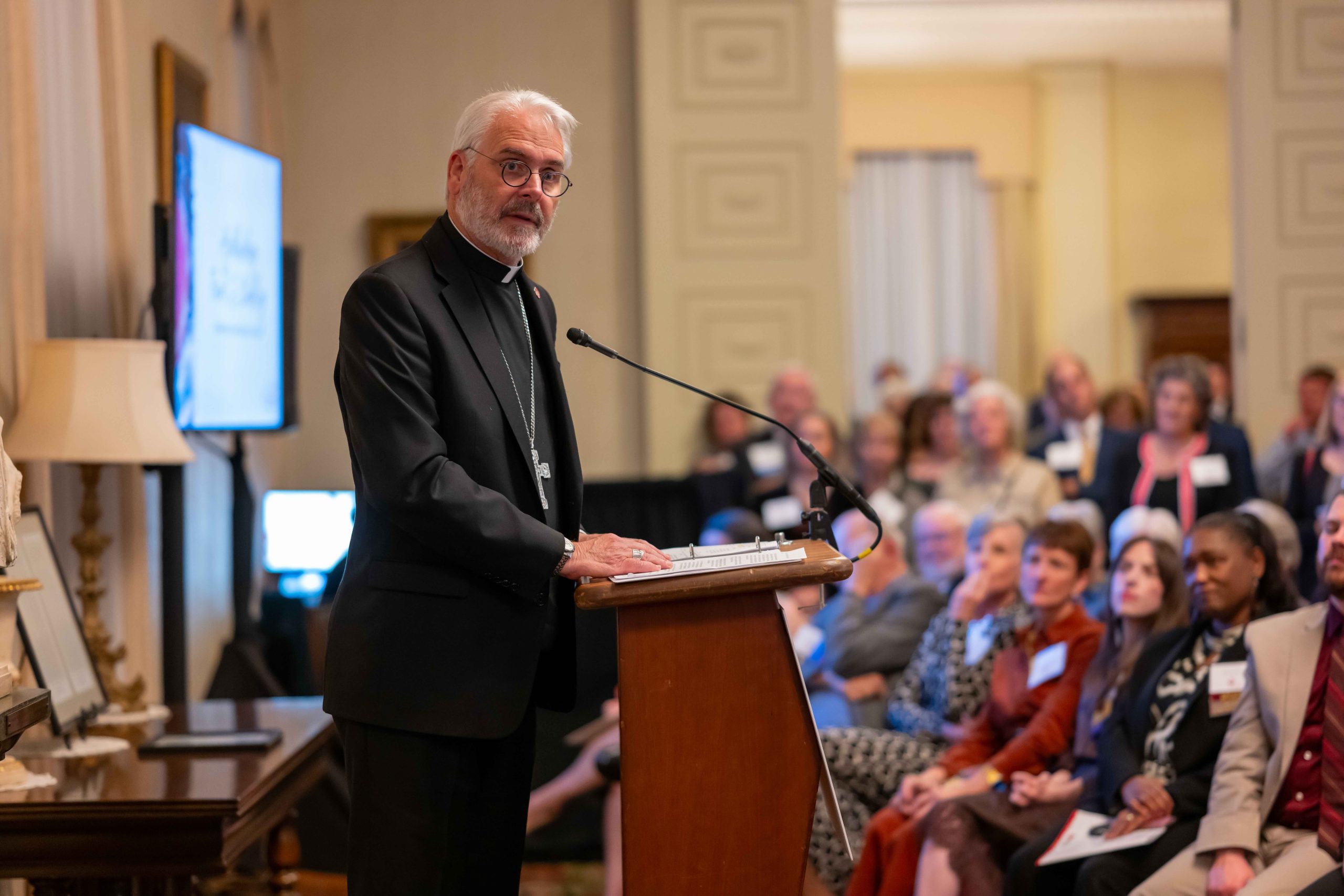
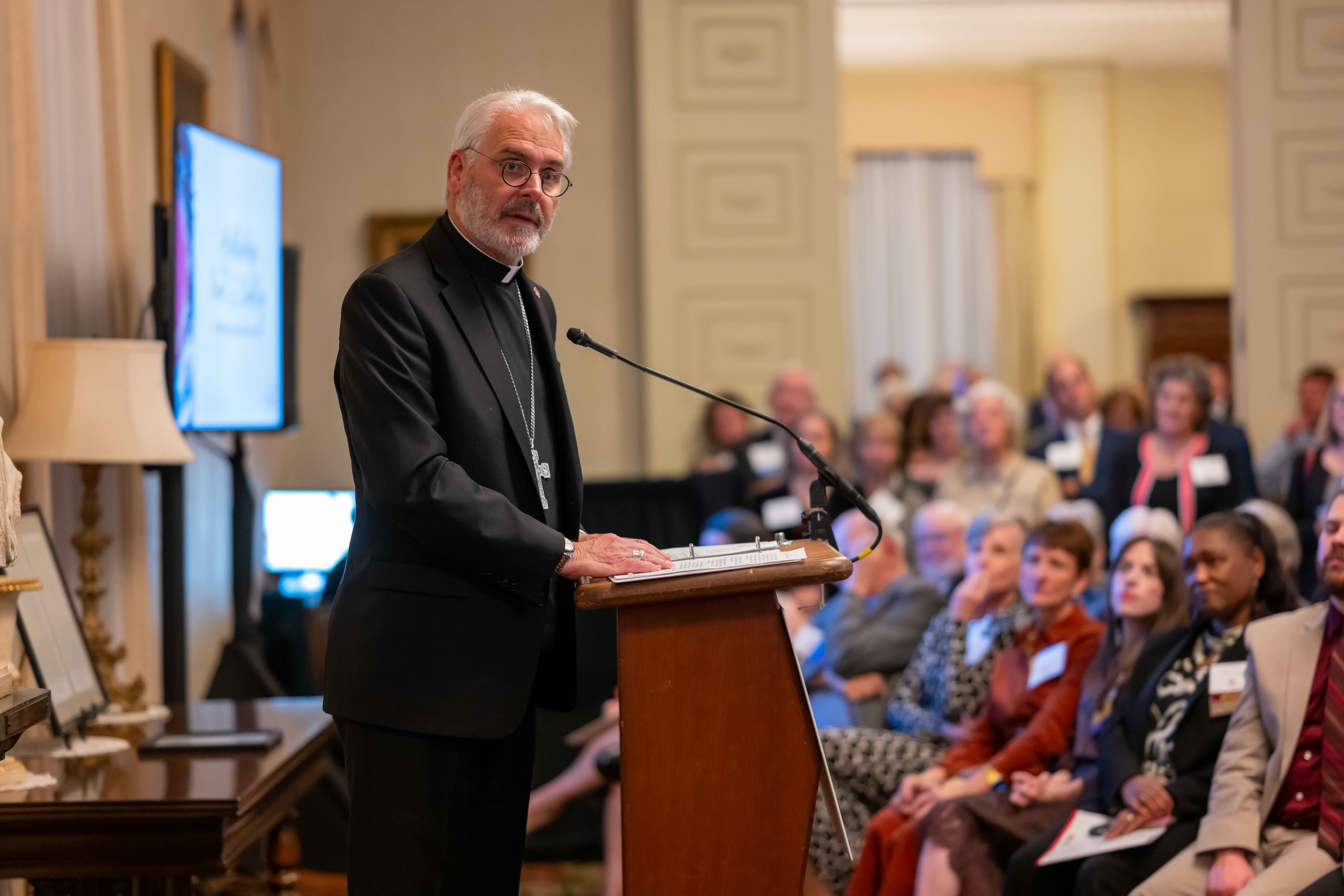
![Supreme Court order leaves federal prison transgender services in place for now – #Catholic – The U.S. Supreme Court on Oct. 21 left in place lower-court rulings that require the federal prison system to continue providing transgender-related benefits to inmates.The unsigned order rejected the Bureau of Prison’s petition to reverse rulings from both the U.S. district court and the U.S. Court of Appeals for the District of Columbia. Justices Clarence Thomas and Samuel Alito said they would have granted the government’s request.The high court’s decision means that the bureau may not implement a policy passed in February that forbids the use of hormone therapy on prisoners who believe themselves to be the opposite sex. The rule also forbids “social accommodations” including wigs and makeup.The suit against the Bureau of Prisons was brought by several inmates who identify as transgender.LGBT-related policy at federal prisons has been in flux following President Donald Trump’s 2024 election. Earlier that year, the Biden Justice Department had signaled that prisons throughout the United States must provide prisoners with transgender-related medical care, including “hormone therapy” and other gender-related requests.Just after taking office in January 2025, on the other hand, Trump issued an executive order that purported to combat “efforts to eradicate the biological reality of sex.” Among the provisions of that order was a directive ordering the Bureau of Prisons to “[revise] its policies concerning medical care” to move away from gender-related provisions.](https://unitedyam.com/wp-content/uploads/2026/10/supreme-court-order-leaves-federal-prison-transgender-services-in-place-for-now-catholic-the-u-s-supreme-court-on-oct-21-left-in-place-lower-court-rulings-that-require-the-federal-prison-system.jpg "Supreme Court order leaves federal prison transgender services in place for now – #Catholic – The U.S. Supreme Court on Oct. 21 left in place lower-court rulings that require the federal prison system to continue providing transgender-related benefits to inmates.The unsigned order rejected the Bureau of Prison’s petition to reverse rulings from both the U.S. district court and the U.S. Court of Appeals for the District of Columbia. Justices Clarence Thomas and Samuel Alito said they would have granted the government’s request.The high court’s decision means that the bureau may not implement a policy passed in February that forbids the use of hormone therapy on prisoners who believe themselves to be the opposite sex. The rule also forbids “social accommodations” including wigs and makeup.The suit against the Bureau of Prisons was brought by several inmates who identify as transgender.LGBT-related policy at federal prisons has been in flux following President Donald Trump’s 2024 election. Earlier that year, the Biden Justice Department had signaled that prisons throughout the United States must provide prisoners with transgender-related medical care, including “hormone therapy” and other gender-related requests.Just after taking office in January 2025, on the other hand, Trump issued an executive order that purported to combat “efforts to eradicate the biological reality of sex.” Among the provisions of that order was a directive ordering the Bureau of Prisons to “[revise] its policies concerning medical care” to move away from gender-related provisions.")